
Is Energy a Good Career Path? 10 Jobs, Salaries, and What to Expect
TL;DR
• Yes, energy is a good career path. Wind turbine technicians and solar PV installers are the two fastest-growing occupations in America, with 50% and 42% projected growth through 2034 (BLS).
• Energy careers span a wide salary range: solar installers start around $51,860, while petroleum engineers earn a median of $141,280 (BLS, May 2024). The sector covers renewables, traditional oil and gas, utilities, and emerging cleantech.
• You don't need an engineering degree for every energy job. Many entry-level roles require only a high school diploma plus on-the-job training, while bachelor's-level positions start at $70,000+.
• This guide covers 10 specific energy careers with verified salary data, what education you actually need, and how to decide between renewable and traditional energy paths. Whether you're picking a major or switching lanes mid-career, here's what the numbers say.
An Externship is a short, real-world professional experience where you work on a company project with guided support from an industry mentor. The HP Tech Ventures Deal Sourcing & Startup Analysis Externship covers the investment side of clean energy; the Schreiber Foods Zero Waste Sustainability Strategy Externship puts you on a hands-on sustainability project with professional mentorship.
What Does the Energy Industry Actually Look Like Right Now?
The energy industry is three industries stacked on top of each other. Understanding which one you're looking at changes everything about the career math.
Renewables (solar, wind, battery storage, geothermal) is where the explosive growth is. The BLS projects solar, wind, and other renewable generation as the fastest-growing industries through 2034. Federal investment through the Inflation Reduction Act has locked in billions for clean energy through the 2030s. These jobs aren't disappearing even if political winds shift.
Traditional energy (oil, natural gas, coal, nuclear) still employs millions and pays the highest salaries in the sector. Petroleum engineers earn over $141,000 at the median. But growth is flat or declining in most fossil fuel roles, and long-term career bets here carry real uncertainty.
Utilities and grid (power generation, transmission, distribution) is the infrastructure backbone. Power plant operators earn six figures. Grid modernization is creating new roles in smart grid technology and energy storage. As more renewables come online, the grid needs more people to manage what's a genuinely complicated transition.
So which lane is right for you? That depends on what you're optimizing for, and we'll get into that.
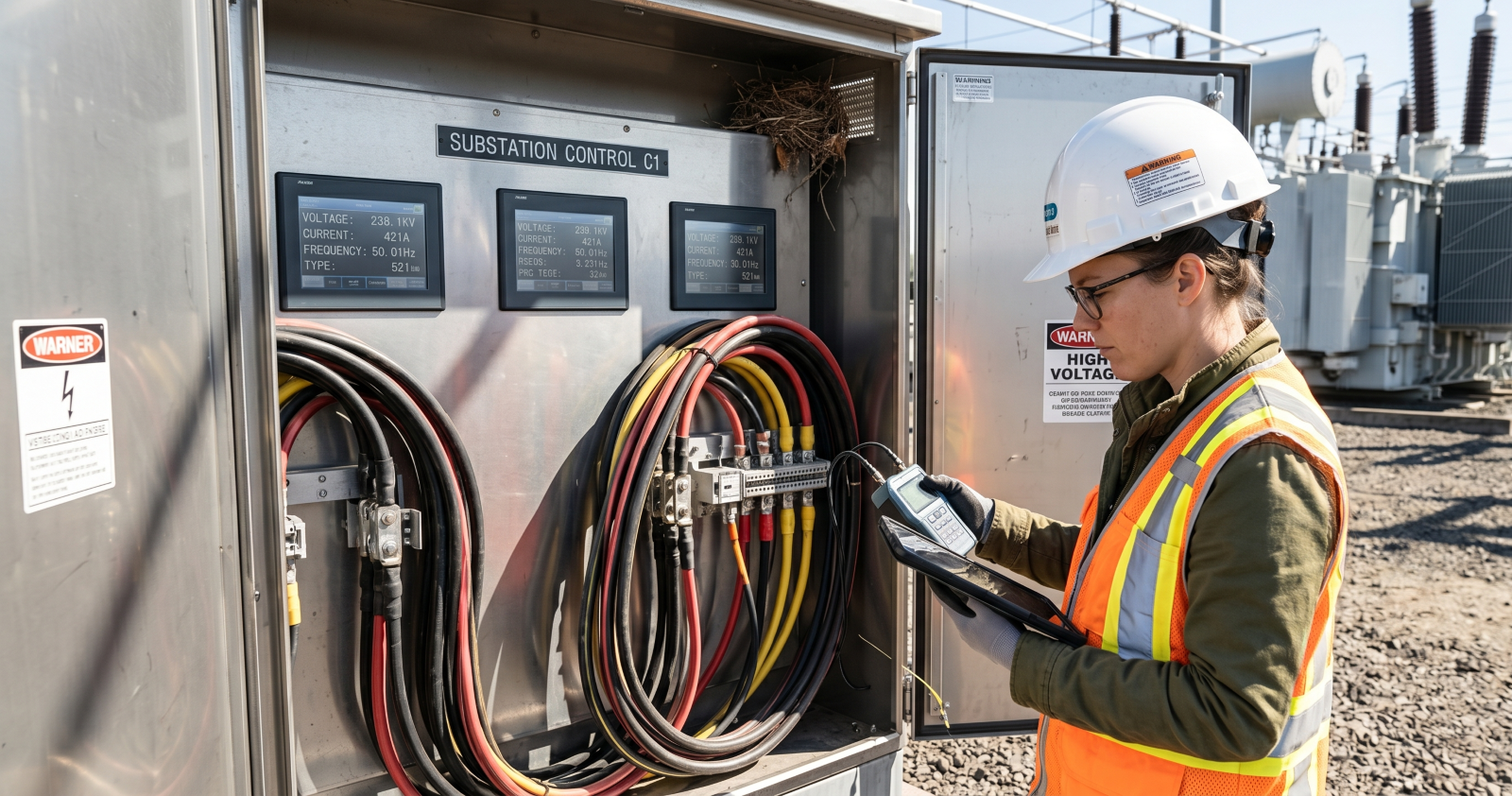
What Are the Highest-Paying Energy Jobs?
Energy careers cover a massive salary range. Here are 10 roles ranked by pay, with verified BLS data where available.
Petroleum Engineer ($141,280)
Petroleum engineers design methods to extract oil and gas from underground deposits. The BLS reports a median salary of $141,280 (May 2024), making it one of the highest-paid engineering specializations. Projected growth: just 2% through 2034.
This is the top salary on this list. But it comes with a real question attached. As the energy transition accelerates, fossil fuel extraction faces long-term demand pressure. You're essentially betting that oil and gas will remain profitable for the entire length of your career. For many people, that bet still pays off. For others, the uncertainty isn't worth it. Bachelor's in petroleum, mechanical, or chemical engineering required.
Electrical Engineer — Power Systems ($111,910)
Electrical engineers in power systems design and maintain the infrastructure that moves electricity from generation to your wall outlet. BLS median: $111,910 (May 2024). Growth: 6%.
This role is getting more interesting, not less. Grid modernization, renewable integration, and battery storage all need electrical engineers. You're not just maintaining old systems. You're building the infrastructure for how energy actually works in the future. Bachelor's in electrical engineering required.
Environmental Engineer ($104,170)
Environmental engineers solve problems tied to pollution, waste management, and sustainability compliance. BLS median: $104,170 (May 2024). Growth: 4%.
This role sits at the intersection of engineering and environmental policy. You might be designing water treatment systems, planning emissions reduction strategies, or helping companies meet new sustainability regulations. It's one of the more mission-driven engineering paths out there, and the regulatory landscape keeps expanding. Bachelor's in environmental or chemical engineering required.
Power Plant Operator ($103,600)
Power plant operators control the systems that generate electricity. BLS median: $103,600 (May 2024).
Here's what makes this role interesting: you don't necessarily need a bachelor's degree. Many operators enter through vocational training, military experience, or utility apprenticeship programs. The pay is excellent for the education level required. The trade-off: shift work (plants run 24/7) and the physical reality of operating heavy industrial equipment. Plant consolidation means fewer total positions, but retirements are creating steady openings.
Environmental Scientist ($80,060)
Environmental scientists study how human activity affects the natural world, then develop solutions. BLS median: $80,060 (May 2024). Growth: 4%.
If you're science-minded but not into engineering, this is your path. You'd work on environmental impact assessments, monitor pollution levels, or consult for companies dealing with environmental regulations. A bachelor's in environmental science, biology, or chemistry gets you in the door. For a related look at what you can do with a biology degree, we've got a full guide.
Energy Manager / Sustainability Manager (~$85,000-$120,000)
Energy and sustainability managers oversee a company's energy use, emissions reporting, and environmental strategy. Salary runs from roughly $85,000 to $120,000+ depending on company size and industry. This role doesn't have its own BLS category yet, which actually tells you something about how new it is.
As companies face ESG reporting requirements and carbon reduction targets, this function is growing fast. You don't need an engineering degree. A bachelor's in business, environmental science, or sustainability works. What matters more is understanding how organizations consume energy and knowing how to measure and cut it.
Wind Turbine Technician ($62,580)
Wind turbine techs install, maintain, and repair wind turbines. BLS median: $62,580 (May 2024). Projected growth: 50% through 2034. That's the single fastest-growing occupation in the country.
No bachelor's degree needed. Most technicians complete a two-year technical program or learn on the job. The work is physical, outdoor, and often at height. You need to be genuinely comfortable climbing 300-foot towers. But the demand is enormous, and the pay-to-education ratio is one of the best in the entire sector.
Solar Photovoltaic Installer ($51,860)
Solar PV installers assemble, install, and maintain rooftop and ground-mounted solar panel systems. BLS median: $51,860 (May 2024). Growth: 42% through 2034, second-fastest in the country.
Entry requirements are low: high school diploma plus on-the-job training. An OSHA-10 safety card and physical readiness matter more than academic credentials here. The Inflation Reduction Act is driving a massive buildout of residential and commercial solar, which means these jobs are spread across the country, not concentrated in a few metros. Getting a NABCEP certification moves you into higher-paying installer and design roles.
Energy Auditor (~$62,700)
Energy auditors assess buildings for energy efficiency and recommend improvements. Average salary is roughly $62,700 according to Glassdoor, though experienced auditors in high-cost markets earn significantly more.
Building decarbonization mandates are expanding this field fast. Cities like New York and Boston now require large buildings to hit emissions benchmarks, and someone needs to audit them. BPI (Building Performance Institute) and HERS (Home Energy Rating System) certifications are the entry tickets. A bachelor's degree helps but isn't required.
Energy Sales / Business Development (~$65,000-$90,000+)
Not technical but interested in energy? Sales and business development roles offer solid entry points. B2B solar companies, EV fleet providers, and energy efficiency firms all need people who can translate technical products into business language. Base salaries range from $65,000 to $90,000, with commission upside that can push total comp well above six figures.
No specific degree required. Strong communication skills and willingness to learn the technical basics go further than an engineering background in these roles. If your education leaned toward business, marketing, or communications, this is your lane.

What Are the Best Energy Careers for Business, Finance, and Tech Majors?
Most energy career guides assume you're getting an engineering degree. But the energy industry also runs on consulting firms, investment funds, and software platforms. If your background is business, finance, or computer science, these are your lanes — and they're growing alongside the physical infrastructure.
Energy / CleanTech Consulting ($85,000–$150,000+)
Energy consultants advise utilities, corporations, and governments on strategy, policy, and energy transition planning. Big consulting firms like McKinsey, Deloitte, and BCG all have dedicated energy practices. Boutique shops like Wood Mackenzie, ICF, and Guidehouse specialize entirely in energy, utilities, and sustainability.
Entry-level salaries start around $85,000–$95,000 for bachelor's hires at major firms. The work spans market analysis, regulatory strategy, carbon accounting, and M&A advisory. And consulting is one of the faster paths to senior energy leadership — consultants regularly move client-side into VP and director roles after a few years.
You don't need an engineering degree. A finance, economics, or business background with an interest in energy policy gets you in the door at boutique firms. What matters more is whether you can build a model and communicate what it means.
Clean Energy Investment and Venture Capital ($80,000–$120,000+)
Clean energy venture capital is one of the more interesting corners of the energy industry right now. Funds like Energy Innovation Capital back early-stage clean energy startups — everything from battery storage and grid software to carbon capture and next-generation solar.
Analysts in this space source deals, evaluate startups, model investment theses, and track portfolio companies. It's competitive. But it's also one of the only places where you can combine finance skills with real climate work and call it your job.
The HP Tech Ventures Deal Sourcing & Startup Analysis Externship gives you hands-on VC experience before graduation — researching clean energy startups, analyzing deals, and working directly on the investment process. That kind of real exposure is rare at the student level, and it shows up on your resume differently than a generic finance course does. Explore all Externships.
Energy Technology / CleanTech Software ($90,000–$140,000+)
Software is reshaping how energy gets generated, distributed, and consumed. Companies like Stem (AI-powered battery storage), Arcadia (energy data infrastructure), and Voltus (demand response platforms) are building the software layer on top of the physical grid. Product managers, software engineers, and data scientists at these companies earn in the same range as their counterparts at mainstream tech firms.
If you're in CS or data science and care about where energy comes from, this is a legitimate path. These companies are still early enough that individual contributors have real impact — you're not shipping marginal features on a mature platform, you're building the tools that help utilities manage a genuinely complex grid transition.
How Much Do Energy Careers Pay?
Across these 10 roles, salaries run from $51,860 to $141,280 at the median. The pattern is clear: higher education generally means higher pay. But not always.
Power plant operators earn over $103,000 without a bachelor's degree. Wind turbine techs earn $62,580 with just a two-year program. On the engineering side, six-figure salaries are the norm. The salary floor in energy is higher than in many other sectors, and the ceiling runs well into executive territory for experienced engineers and managers.
For context, the BLS Education Pays data shows bachelor's degree holders earn a median of $1,493 per week, roughly $77,636 per year. Multiple energy careers exceed that number, even at the associate's degree level. That's not nothing.
| Job Title | Median Salary (BLS May 2024) | Growth (2024–2034) | Education Required |
|---|---|---|---|
| Petroleum Engineer | $141,280 | 2% | Bachelor’s (engineering) |
| Electrical Engineer (Power) | $111,910 | 6% | Bachelor’s (engineering) |
| Environmental Engineer | $104,170 | 4% | Bachelor’s (engineering) |
| Power Plant Operator | $103,600 | Declining | HS + training/licensure |
| Energy/Sustainability Manager | ~$85,000–$120,000 | Growing fast | Bachelor’s (business/enviro) |
| Environmental Scientist | $80,060 | 4% | Bachelor’s (science) |
| Energy Sales / BD | ~$65,000–$90,000+ | Growing | No specific degree |
| Wind Turbine Technician | $62,580 | 50% | HS + 2-year program |
| Energy Auditor | ~$62,700 | Growing | HS + BPI/HERS cert |
| Solar PV Installer | $51,860 | 42% | HS + OJT |
What Education Do You Need for Energy Jobs?
Energy careers fall into three education tiers. Knowing which tier your target role sits in saves you time and money.
Tier 1: High school diploma + certification or OJT. Wind turbine technician, solar PV installer, energy auditor, power plant operator (with additional licensure). These roles value physical capability, safety training, and industry certifications (NABCEP, BPI, OSHA-10) over academic credentials. Starting salaries: $50,000-$65,000.
Tier 2: Bachelor's degree. Electrical engineer, environmental engineer, environmental scientist, energy/sustainability manager. These require a four-year degree in engineering, environmental science, or a related field. Starting salaries: $70,000-$100,000+. Check out our guide on skills to put on your resume for how to position STEM coursework.
Tier 3: Advanced degree or PE licensure. Petroleum engineer (often master's for advancement), nuclear engineer, research scientist. These are specialized paths with the highest salary ceilings but also the longest education timelines. Starting salaries: $90,000-$140,000+.
Renewable or Traditional Energy: Which Is the Better Career Bet?
Honestly, this is the question everyone asks, and there's no clean answer. It depends on what you're optimizing for.
Renewables offer explosive growth, strong policy tailwinds, and the sense that you're building something that matters. But many of the fastest-growing roles (installer, technician) are physically demanding and pay less than engineering positions. The career ceiling is rising as the industry matures. It's just not as high yet as traditional energy at the top.
Traditional energy (oil, gas, nuclear) pays higher at every level and has established career ladders. A petroleum engineer earns more than double what a solar installer makes. But growth is flat, regulatory pressure is increasing, and public sentiment is shifting. Long-term stability is harder to predict than it was ten years ago.
So what's the actual best bet for most people? Build skills that work across both. Grid modernization, energy storage, and electrification sit right at the intersection. An electrical engineer who understands both renewable integration and traditional grid operations is probably the most employable person in the sector right now.
How Can Students Break Into the Energy Industry?
Energy companies don't get the same flood of applications that tech and finance firms do. That's actually an advantage for students who know where to look.
Build real energy industry experience through an Externship. Two options stand out. The HP Tech Ventures Deal Sourcing & Startup Analysis Externship puts you on a real clean energy VC project — sourcing deals and analyzing startups in the clean energy space, which is directly relevant if you're pursuing the investment or consulting track. The Schreiber Foods Zero Waste Sustainability Strategy Externship gives you hands-on sustainability project experience with professional mentorship, a strong signal for any energy or environmental role. Both are resume-ready. Explore all Externships.
Get certified. NABCEP for solar, BPI for energy auditing, LEED AP for green building. Certifications signal that you're serious and prepared, and they're cheaper and faster than a second degree.
Target utility apprenticeship programs. Major utilities like Duke Energy, NextEra, and Southern Company run structured entry programs. These are among the best-paying entry-level opportunities in the sector, and they're far less competitive than big tech or banking internships. Check our best websites to find internships for where to search.
Take relevant coursework now. Even if you're not an engineering major, courses in physics, environmental science, or energy policy show employers you understand the fundamentals. The DOE career map is genuinely useful for matching your interests to specific energy pathways.
And don't let the entry-level experience paradox stop you. Energy is one of the more accessible industries for students willing to earn certifications and pursue hands-on experience.
Frequently Asked Questions
Is energy a good career path for the future?
Yes. The BLS projects wind turbine technicians (+50%) and solar PV installers (+42%) as the two fastest-growing occupations through 2034. The global energy transition ensures long-term demand across renewables, grid modernization, and energy efficiency. Even traditional energy roles stay well-paid as the transition plays out over decades.
What's the highest-paying job in the energy sector?
Petroleum engineer, with a BLS median salary of $141,280 (May 2024). Electrical engineers in power systems ($111,910) and environmental engineers ($104,170) also earn six figures. Higher salaries generally require a bachelor's degree in engineering.
Can you get an energy job without an engineering degree?
Yes. Wind turbine technicians ($62,580 median), solar PV installers ($51,860), energy auditors, and energy sales roles don't require engineering degrees. Many entry-level positions need only a high school diploma plus on-the-job training or industry certifications like NABCEP or BPI.
Is renewable energy a stable career?
Renewable energy is growing faster than nearly any other sector right now. The Inflation Reduction Act has locked in billions in clean energy investment through the 2030s. BLS growth projections of 42-50% through 2034 point to strong stability, though individual roles will evolve as the technology advances.
What degree do you need for energy careers?
It depends on the role. Technician and installer positions require a high school diploma plus training. Engineering, science, and management roles typically need a bachelor's in mechanical, electrical, environmental, or chemical engineering, or in environmental science. Certifications like NABCEP, BPI, PE, and LEED AP can supplement or sometimes substitute for formal degrees.
Can I work in energy without being an engineer or technician?
Yes. The energy industry has strong career tracks for business, finance, and tech majors. Energy consultants at firms like Deloitte, Wood Mackenzie, and ICF advise on energy strategy and policy without engineering backgrounds. Clean energy VC funds hire analysts with finance and business skills. CleanTech software companies — building grid management tools, EV platforms, and energy data systems — hire product managers and software engineers at tech-level salaries. The HP Tech Ventures Deal Sourcing & Startup Analysis Externship is a direct entry point into the investment side of clean energy.
How do I start a career in energy with no experience?
Start with certifications (NABCEP for solar, BPI for energy auditing) or a sustainability Externship to build resume-ready experience. Apply to utility apprenticeship programs, energy company internships, or entry-level technician roles that provide on-the-job training. Any STEM coursework helps, and the DOE career map can match your interests to specific pathways.
About the Author
Bifei Wang has spent 17 years focused on human flow and the growth of young professionals, spanning international education, career training and coaching, and recruitment process outsourcing. Over 7 years at Extern, he has had one-on-one sessions with thousands of students exploring careers in consulting, finance, tech, marketing, and data, giving him a firsthand view of how the job market has shifted for early-career professionals and what it actually takes to break in.