Engineering Internships Summer 2027: Every Discipline, Top Program, and Application Timeline in One Guide
Updated October 2026: application status and career page links checked October 9, 2026. Job market data from 744+ engineering intern postings across mechanical, civil, and electrical disciplines (July 2026 snapshot).
TL;DR
• Engineering internship applications for summer 2027 open as early as August 2026 at aerospace and defense firms, with most mechanical, civil, and biomedical programs posting September through January. According to NACE's 2025 Internship & Co-op Report, employers with in-person internships extend full-time offers to 72% of their intern class.
• This guide covers six engineering disciplines (aerospace, mechanical, civil, electrical, chemical, and biomedical), 20+ top programs with direct career page links, and the full 2027 application timeline by industry.
• You don't need a 4.0 GPA or prior experience to land one. We break down exactly what recruiters look for and how to stand out as a sophomore or freshman.
• Not every engineering career path requires a traditional internship. The last section covers how engineering students are building AI, data, and consulting skills alongside their technical degree.
Externships are short, remote professional experience programs where you work on real projects with real companies. If you're an engineering student looking to build cross-functional skills before recruiting season, these Externships can strengthen your application:
• Hydroficient IoT Cyber Defense Externship (IoT security and embedded systems)
• Amazon Fulfillment Center Operational Strategy Externship (operations and industrial engineering)
Browse all 14 industries and 100 company guides in our Best Summer 2027 Internships master hub.
What Are Engineering Internships, and How Are They Different From Tech Internships?
Here's the thing most people get wrong: "engineering internship" and "tech internship" aren't the same thing. Engineering internships run 10 to 16 weeks. You work on physical systems, infrastructure, manufacturing, or R&D at companies like Boeing, Tesla, and GE Aerospace. You're doing CAD modeling, running lab tests, visiting field sites, prototyping hardware. It's tangible.
Tech internships? Those are software. Code. Entirely different world.
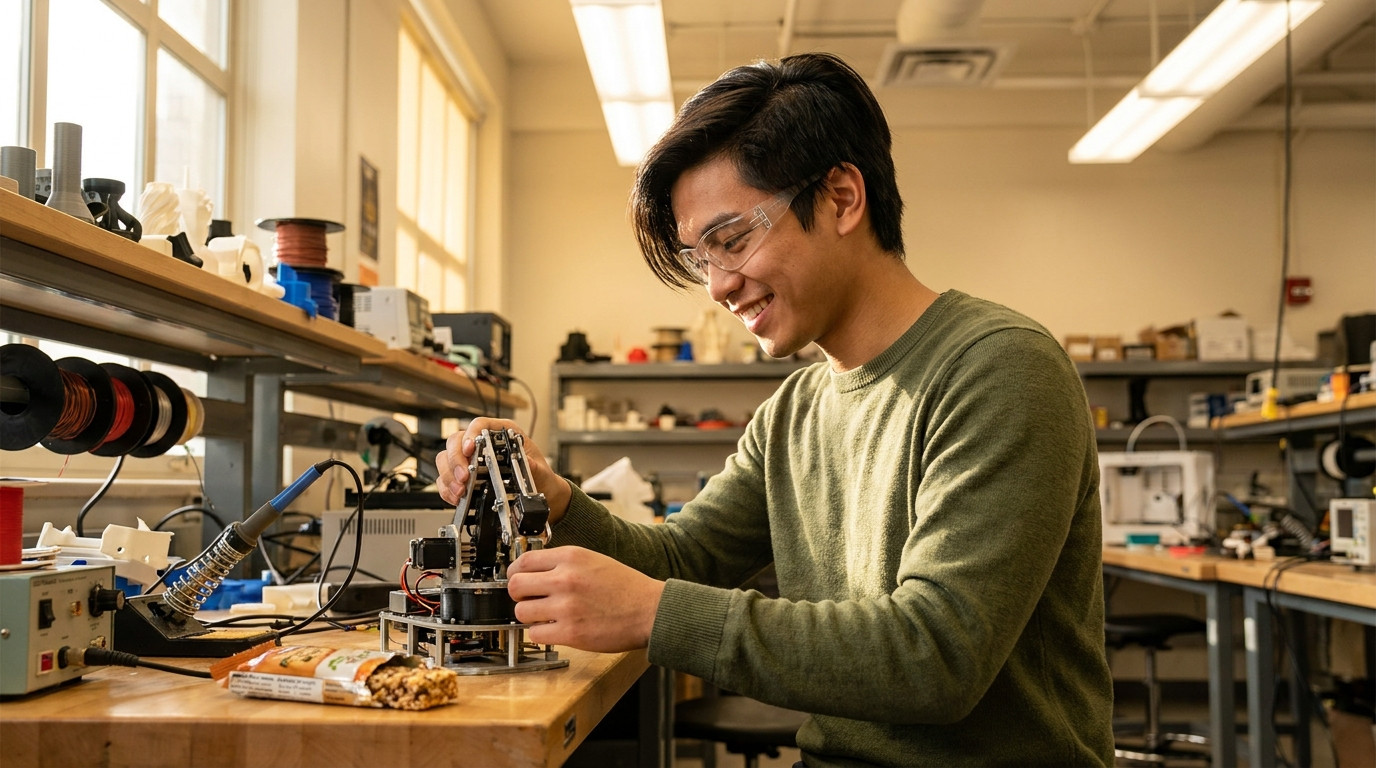
What Counts as an Engineering Internship in 2027
An engineering internship is a temporary, paid position where you apply classroom knowledge to real engineering problems in a professional setting. We're talking mechanical, civil, electrical, chemical, aerospace, biomedical, environmental, and industrial engineering. According to the Bureau of Labor Statistics, architecture and engineering occupations employed over 2.9 million workers in 2024. That makes it one of the largest professional categories in the country.
This guide covers non-software disciplines specifically. Looking for SWE roles? Our tech internships summer 2027 guide has you covered there.
Engineering Internships vs Tech Internships vs Co-ops
People use these interchangeably. They shouldn't.
An engineering internship is a single summer block (10-16 weeks) focused on hardware, systems, or infrastructure. A tech internship covers software, data engineering, and IT. And a co-op? That alternates semesters of work and school across two or three rotations, lasting four to eight months total.
Pay is different too. According to NACE's 2025 Guide to Compensation for Interns & Co-ops, the average hourly wage for bachelor's-level interns is $23.04, with engineering and computer science topping the chart. Co-ops generally pay less per hour but you earn more overall because you're working longer.
So which one fits you? Want depth and a faster graduation? Summer internship. Prefer cycling between work and school for one company? Co-op. Both convert to full-time offers at strong rates.
Which Engineering Disciplines Are Hiring for Summer 2027?
All six major disciplines are recruiting for summer 2027. But the timeline and the competition vary wildly. Aerospace opens earliest and attracts the most applicants. Civil and environmental engineering? More openings relative to the pool.
Aerospace and Defense Engineering
This is the most competitive track. Full stop.
According to the BLS, aerospace engineers held about 71,600 jobs in 2024, with employment projected to grow 6% from 2024 to 2034. Median annual salary: $134,830. That's the highest of any discipline in this guide.
SpaceX, Boeing, Lockheed Martin, Northrop Grumman, NASA JPL. Those are your targets. And here's something that actually works in your favor: many defense-sector positions require U.S. citizenship and security clearance eligibility. That narrows the pool significantly. If you qualify, your odds improve.
Aircraft redesign for fuel efficiency plus commercial space ventures (small satellites, launch services) are both pushing demand upward.
Mechanical Engineering
The largest traditional engineering field by headcount. The BLS reports 293,100 mechanical engineering jobs in 2024, projected to grow 9% through 2034. In BLS language, that's "much faster than average." About 26,500 new positions over the decade. Median salary: $102,320.
What makes mechanical internships interesting is the sheer range. You could end up designing HVAC systems at Honeywell one summer and working on EV drivetrain components at Tesla the next. Or optimizing manufacturing at 3M. Or testing jet engine parts at GE Aerospace.
That breadth means more opportunities per applicant than aerospace. Less prestige per role, maybe. But more paths in.
Civil and Environmental Engineering
Steady. That's the word for civil.
Employment grows 5% from 2024 to 2034 according to the BLS, with about 23,600 openings projected each year. The Infrastructure Investment and Jobs Act injected $1.2 trillion into roads, bridges, water systems, and broadband. That money is still moving through state and local projects, which means hiring.
AECOM, Bechtel, Jacobs, and state Departments of Transportation are major employers. Environmental engineering specifically is growing as sustainability mandates expand. Climate infrastructure, water treatment, renewable energy systems. If that's what you care about, this is where you want to be.
Electrical and Computer Hardware Engineering
Not software. This is hardware.
Chip design, power systems, controls engineering, embedded systems. The BLS counts about 192,000 electrical engineering jobs in 2024, with 7% growth projected through 2034. Median salary: $111,910.
Intel, Texas Instruments, Qualcomm, National Grid, Siemens. If you're drawn to power grid modernization, semiconductor design, or robotics hardware, demand is rising. EVs and renewable energy infrastructure need engineers who understand power electronics and grid-scale systems. There aren't enough of you.
Chemical and Biomedical Engineering
Smaller disciplines by headcount. But they punch above their weight.
Chemical engineers held about 21,600 jobs in 2024, with a median salary of $121,860 (second only to aerospace). Biomedical engineering is at 22,200 jobs, growing 5%, with a median of $106,950.
Chemical engineering internships at Dow, ExxonMobil, or BASF involve process optimization, materials development, plant-scale operations. Biomedical at Medtronic, Johnson & Johnson, or Pfizer? Medical device R&D, FDA regulatory processes, quality engineering. That regulatory exposure is a genuine differentiator. Most engineering disciplines can't give you that.
What Are the Top Engineering Internship Programs for Summer 2027?
The programs worth targeting combine three things: real project ownership, mentorship from working engineers, and a clear path to full-time offers. Here's what that looks like across disciplines.

Aerospace: SpaceX, Boeing, Lockheed Martin, NASA
SpaceX is the name everyone wants on their resume. Interns work on actual flight hardware at Hawthorne or Starbase, embedded in teams building Falcon, Starship, and Raptor engines. They're famously selective. Apply the instant positions go live (typically August-September). Roles fill fast.
Boeing offers rotational internships across defense, space, and commercial divisions. Everett, WA, St. Louis, or Huntsville, AL. More openings than SpaceX, but more structured (and sometimes slower) project work.
Lockheed Martin runs one of the largest engineering intern programs in defense. Security clearance required for most roles. The upside: strong internship-to-full-time conversion.
NASA offers positions through the NASA Pathways Program and the JPL internship program. Competitive, but open to a wider range of disciplines than just aerospace. Particularly valuable if you're research-oriented.
Automotive and Energy: Tesla, Ford, GE Aerospace
Tesla hires mechanical, electrical, and manufacturing engineering interns across its Gigafactories and design centers. The work is hands-on. Interns have contributed to battery cell design, production line automation, and thermal management systems. Check Tesla's careers page starting September.
Ford runs internships through product development in Dearborn, MI. More traditional intern culture, which isn't a bad thing. Mentorship pairings, end-of-summer presentations, structured feedback. Good for people who want support alongside the work.
GE Aerospace is worth special attention. Their Edison Engineering Development Program has been running since 1923. One of the oldest rotational programs in engineering. The internship track feeds directly into the EEDP, so conversion is strong. They post early, often by August.
Industrial and Infrastructure: Siemens, 3M, Honeywell, AECOM
These won't make your Instagram reel pop the same way SpaceX would. But honestly? They often give you more hands-on responsibility and you'll face less competition per opening.
Siemens: automation, smart infrastructure, digital industries. 3M: materials science and manufacturing across 60,000+ products. Honeywell: aerospace systems, building technologies, process controls. AECOM: one of the largest infrastructure firms globally, with civil engineering programs tied to massive public works.
At Extern, we've seen that students who build project-based experience before applying to these programs stand out precisely because fewer applicants bother to prepare that way.
Biomedical and Pharma: Medtronic, Johnson & Johnson, Pfizer
Medtronic places interns in medical device R&D. Cardiac rhythm devices, surgical robotics, neuromodulation. You work alongside quality engineers and get exposure to FDA design controls early.
Johnson & Johnson offers manufacturing and process engineering across medical devices and pharmaceuticals. Structured mentorship. Company-wide intern cohort. It feels like a big-company program because it is one.
Pfizer hires in process engineering and supply chain engineering. If you want to understand pharmaceutical manufacturing at scale (how do you produce billions of doses?), this is where to look.
30+ Engineering Companies Hiring for Summer 2027 (With Career Page Links)
This table covers 30 companies across aerospace, automotive, industrial, electrical, chemical, biomedical, and government sectors. Bookmark this page and check back as application windows open through fall 2026 and into early 2027.
| Company | Sector | Expected App Window | Career Page |
|---|---|---|---|
| SpaceX | Aerospace & Defense | Aug–Sep 2026 | Careers |
| Boeing | Aerospace & Defense | Aug–Oct 2026 | Entry Level |
| Lockheed Martin | Aerospace & Defense | Aug–Oct 2026 | Internships |
| Northrop Grumman | Aerospace & Defense | Aug–Oct 2026 | Students & Entry Level |
| RTX (Raytheon) | Aerospace & Defense | Aug–Oct 2026 | Students & Recent Grads |
| NASA | Aerospace & Government | Year-round | NASA Careers |
| NASA JPL | Aerospace & Government | Year-round | JPL Internships |
| Tesla | Automotive & Energy | Sep–Oct 2026 | Careers |
| Ford | Automotive & Energy | Sep–Oct 2026 | Students & Recent Grads |
| General Motors | Automotive & Energy | Sep–Oct 2026 | Internship Program |
| GE Aerospace | Automotive & Energy | Aug–Sep 2026 | Careers |
| Siemens | Industrial & Infrastructure | Oct–Dec 2026 | Early Careers |
| 3M | Industrial & Infrastructure | Oct–Dec 2026 | Careers |
| Honeywell | Industrial & Infrastructure | Oct–Dec 2026 | Students & Graduates |
| AECOM | Civil & Infrastructure | Jan–Mar 2027 | Early Careers |
| Bechtel | Civil & Infrastructure | Oct–Dec 2026 | Careers (Internship Program) |
| Jacobs | Civil & Infrastructure | Jan–Mar 2027 | Early Careers |
| Intel | Electrical & Semiconductor | Oct–Dec 2026 | Students |
| Texas Instruments | Electrical & Semiconductor | Sep–Nov 2026 | Internships |
| Qualcomm | Electrical & Semiconductor | Sep–Nov 2026 | Interns |
| National Grid | Electrical & Utilities | Oct–Dec 2026 | Early Careers (US) |
| Dow | Chemical | Oct–Dec 2026 | Students & Recent Grads |
| ExxonMobil | Chemical & Energy | Sep–Nov 2026 | Internships |
| BASF | Chemical | Oct–Dec 2026 | Internships |
| Medtronic | Biomedical & Pharma | Oct–Dec 2026 | Students & Graduates |
| Johnson & Johnson | Biomedical & Pharma | Sep–Nov 2026 | Students |
| Pfizer | Biomedical & Pharma | Oct–Dec 2026 | Students |
| Argonne National Lab | Government / National Lab | Jan–Feb 2027 | Undergraduate Programs |
| Sandia National Labs | Government / National Lab | Jan–Feb 2027 | Students & Postdocs |
| Oak Ridge National Lab | Government / National Lab | Jan–Feb 2027 | Students & Postdocs |
When Do Engineering Internship Applications Open? The 2027 Timeline
Timing matters more than people realize. Miss the window for aerospace? Those roles are filled. Here's the full calendar so you don't get caught off guard.
August to October 2026: Aerospace, Defense, and Large Manufacturers
First wave. SpaceX, Boeing, Lockheed Martin, Northrop Grumman, Raytheon all post summer 2027 positions between August and October. GE Aerospace and large auto OEMs (Tesla, Ford, GM) also open here.
What to do: This wave is live now. As of October 9, 2026, Boeing, Lockheed Martin, Northrop Grumman, RTX, SpaceX, and GM all have summer 2027 intern roles posted, so polish your resume this week and apply within the first two weeks of new postings going live. Set up job alerts on each company's career page. These roles pull hundreds of applications per opening, and many close early once the pool is big enough.
For broader timing context, our when to apply for internships guide covers the full calendar across every industry.
October to December 2026: Most Engineering Disciplines
The peak window. Mechanical, electrical, chemical, biomedical. University career fairs (September-October) drive recruiting here. Siemens, 3M, Honeywell, Dow, Intel, Medtronic all recruit heavily during this stretch.
What to do: Attend your university's engineering career fair with printed resumes and a 30-second pitch per target company. Apply through both the university portal and the company site. Some hiring managers only check one.
January to March 2027: Civil, Environmental, and Government
Later cycle. AECOM, Jacobs, state DOTs, Army Corps of Engineers, EPA, national labs (Argonne, Sandia, Oak Ridge). NSF REU programs have January-February deadlines. The DOE's SULI program places students at national labs and is one of the best-kept secrets in engineering.
Spring 2027: What to Do if You Missed the Big Deadlines
You're not sunk. Mid-size firms, startups, and university research labs recruit through April and beyond. Smaller companies can't plan that far ahead and post on a rolling basis.
And this is where remote project-based experience fills a real gap. An Externship in IoT systems or operations strategy gives you resume-ready engineering experience on a flexible timeline. That matters if you're still building your application for the next cycle.
How to Get an Engineering Internship With No Experience
You don't need a prior internship to land your first one. Most employers hiring sophomores and juniors expect classroom knowledge, personal projects, and curiosity. Not a stacked resume.
Having sat down with thousands of students one-on-one at Extern over seven years, one pattern is clear: the students who land engineering internships without prior experience are the ones who can point to something they built, tested, or designed outside of class. Every time.

Build a Project Portfolio That Shows Initiative
Personal projects are your best weapon. Engineering competition teams (ASME, IEEE, SAE, AIAA student chapters) count. So does building a CNC router in your garage. Designing a PCB. Contributing to open-source hardware.
What matters: demonstrating you can take a problem from concept to something that works. A failed senior design prototype shows more initiative than a 3.9 GPA with no practical output. I realize that sounds counterintuitive. But recruiters at Boeing and GE have told me this directly.
Document everything. Photos, specifications, outcomes. A simple portfolio site or organized GitHub repo is enough.
Use Engineering Organizations and Career Fairs
Professional organizations are criminally underused. SWE, NSBE, SHPE, ASME student chapters: these all host events where companies recruit directly. And not just the usual suspects. Second-tier companies show up too, looking for candidates they can't find through mainstream channels.
Career fairs work if (and only if) you prepare. Printed resumes. Research each company's projects beforehand. Specific questions. "I read about your team's work on [project]. What would an intern contribute?" That beats "Tell me about your internship" every single time.
Tailor Your Engineering Internship Resume
Your resume needs to lead with engineering. Not generic content. Here's the formula:
1. Lead with relevant coursework and projects. List courses by name (Thermodynamics II, Signals and Systems, Structural Analysis). Describe one or two projects per course with specific outcomes.
2. Quantify everything. "Designed a load-bearing truss that reduced material cost by 12% while maintaining a safety factor of 2.5" beats "Participated in structural design project."
3. Include software proficiency. SolidWorks, MATLAB, AutoCAD, ANSYS, LabVIEW, Python. Hiring managers filter for these.
4. One page. No exceptions for undergrads.
What the Job Posting Data Actually Shows
Top skills in engineering intern job descriptions
Skill frequency across mechanical, civil, and electrical engineering intern postings · US job boards, July 2026
Method: automated skill-tag extraction from 168 mechanical + 434 civil + 142 electrical engineering intern postings across US job boards, July 2026. Skill variants merged. Workplace: 96% onsite.
AutoCAD dominates engineering intern JDs, driven heavily by civil engineering (66 mentions from civil alone). SolidWorks and generic CAD are neck and neck for mechanical roles. But here's what might surprise you: Python shows up across both electrical and mechanical postings, and MATLAB is still very much alive. Engineering internships are 96% onsite, so expect to be on-site.
In our July 2026 snapshot there were 434 civil engineering intern, 168 mechanical engineering intern, and 142 electrical engineering intern postings active nationwide. Mean salaries cluster around $61K-$73K annualized, with mechanical and electrical at the top.
Need more help? Our guide on how to get an internship with no experience covers the full playbook.
What Do Engineering Internships Pay in 2027?
Short answer: well. Engineering internships are among the highest-paid across all disciplines. According to NACE's 2025 Guide to Compensation, the average hourly wage for bachelor's-level interns is $23.04, with engineering and computer science earning the most.
Pay Ranges by Discipline and Company Size
Aerospace and chemical engineering interns at large corporations can earn $28 to $35 per hour. Civil engineering interns at smaller firms might start around $18 to $22. Many top programs (SpaceX, Boeing, GE Aerospace, Tesla) also provide housing stipends, relocation assistance, or corporate housing that adds $3,000 to $8,000 in value over a summer.
Company size matters. Fortune 500 engineering firms generally pay $24 to $35 per hour. Mid-size companies: $20 to $28. Startups and government agencies: $18 to $25, but often more hands-on responsibility in return.
One thing worth noting: engineering interns are almost always paid. Unpaid engineering internships are rare because the skills are too specialized. Companies can't get away with not compensating you.
Can Sophomores and Freshmen Get Engineering Internships?
Yes. More programs accept underclassmen than most students realize. And a growing number are built specifically for freshmen who haven't touched upper-division coursework yet.
Programs That Accept Underclassmen
Several high-profile options target early-career students:
• GE Aerospace runs a sophomore-specific track that feeds into their Edison Engineering Development Program.
• NASA's internship programs (managed through NASA Internships) accept freshmen for research placements.
• NSF REU (Research Experiences for Undergraduates) places first- and second-year students in university research labs across every engineering discipline.
• DOE SULI puts underclassmen at national labs like Argonne, Sandia, and Oak Ridge.
National lab programs are particularly good for freshmen because they value curiosity and foundational coursework over deep specialization. You don't need to know everything. You need to show you can learn.
How to Position Yourself Without Upper-Division Coursework
You have more to offer than you think. Your physics and calculus foundation, intro engineering courses, and any hands-on work (even high school robotics) count. Join a competition team early. Start a personal project that shows applied engineering thinking.
Remote Externships are another way to build structured professional experience before the traditional cycle. An Externship in IoT security or operational strategy gives you a credential when you're competing against juniors with a year of coursework on you.
What If You Want a Non-Traditional Engineering Career Path?
Engineering careers are increasingly cross-disciplinary. A mechanical engineer at Tesla needs data analysis skills. An aerospace engineer at SpaceX works alongside software teams daily. The students who stand out in 2027? They're the ones combining their technical degree with skills in AI, consulting, data, or product management.

Why Engineering Students Are Moving Into Data, Consulting, and Product Roles
The lines between fields are blurring fast.
Consulting firms like McKinsey and BCG actively recruit engineers. They value structured problem-solving and quantitative rigor. (If that path interests you, our finance internships summer 2027 guide covers the consulting and banking timeline.) Product management teams at hardware companies want people who understand what they're managing. And data roles everywhere benefit from the statistical modeling that engineering programs teach.
This isn't about abandoning engineering. It's about recognizing that the most versatile engineers combine their technical depth with cross-functional skills. Mechanical engineering plus data analytics. Electrical engineering plus product strategy. These combinations create candidates for roles that barely existed five years ago: reliability engineering, smart manufacturing, predictive maintenance, climate tech program management.
Based on data from 70,000+ students on our platform, engineering students who build complementary skills in data, consulting, or product strategy during college report feeling significantly more prepared for the job market. Regardless of whether they end up in a traditional engineering role.
Remote Externships for Engineering Students
Want to build those cross-functional skills alongside your technical coursework? A remote Externship lets you do that on your own schedule. The Hydroficient IoT Cyber Defense Externship combines embedded systems with cybersecurity strategy. The Amazon Fulfillment Center Operational Strategy Externship puts you inside one of the world's most complex supply chains.
These aren't replacements for a Boeing or GE internship. They're complementary. Something different to talk about in interviews. A broader skill set on your resume. And proof that you don't just build things in isolation.
How to Stand Out in Your Engineering Internship Application
Hundreds of applications per opening. That's the reality. The students who get interviews share three traits: they lead with specific project outcomes, they show they understand the company's engineering challenges, and they prepare for technical questions beyond textbook problems.
Cover Letter and Application Tips for Engineering Students
Your cover letter should reference what the company actually builds. Not "I'm passionate about engineering." That tells them nothing.
Try: "I read about your team's work on the CFM RISE engine program, and my coursework in thermodynamics and fluid mechanics directly applies to open-rotor propulsion challenges." Specific. Shows research. Connects your background to their work.
Quantify outcomes. Name your coursework. Reference a relevant project. One page. For templates and full examples, see our how to apply for internships guide.
Technical Interview Prep for Engineering Roles
Different disciplines, different questions. Here's what to expect:
1. Mechanical: Stress analysis, thermodynamics, heat transfer, FEA interpretation, design-for-manufacturing. Expect whiteboard free body diagrams or thermal circuits.
2. Electrical: Circuit analysis, signal processing, digital logic, embedded systems. Be ready to walk through a schematic.
3. Aerospace: Fluid dynamics, orbital mechanics, structural loading, materials selection. NASA and defense add systems engineering scenarios.
4. Chemical: Mass and energy balances, reaction kinetics, process flow diagrams, safety compliance.
Start prepping three to four weeks out. Review fundamentals, practice explaining your projects out loud, and prepare STAR-format answers (Situation, Task, Action, Result) for behavioral questions. The technical stuff is table stakes. The way you communicate it is what separates you.
Frequently Asked Questions
Do engineering internships pay?
Yes. Engineering internships are among the highest-paid, averaging $23.04 per hour overall according to NACE's 2025 compensation guide. Aerospace and chemical engineering interns at large firms can earn $28 to $35 per hour. Many top programs also provide housing stipends or relocation assistance, making them financially accessible for students from any background.
Can freshmen get engineering internships?
Yes, though options are more limited. NASA's internship programs, NSF REU, DOE SULI, and GE Aerospace's early-career track all accept freshmen. National labs like Argonne and Sandia also offer freshman-eligible positions. Building personal projects and joining engineering competition teams strengthens your application at this stage.
What GPA do you need for an engineering internship?
Most programs list a 3.0 minimum, but it varies. SpaceX and Boeing typically look for 3.0 or above. Smaller firms and government labs may flex if you have strong project experience. A 2.8 GPA with relevant hands-on work often beats a 3.5 with no practical output. Projects matter more than you think.
Are remote engineering internships legitimate?
Some are. Remote works well for CAD-heavy, simulation-based, or data analysis roles. Lab work, manufacturing, and field engineering still require on-site presence. Remote Externships from companies like Hydroficient and Amazon offer legitimate project-based experience, especially for building cross-functional skills alongside technical coursework.
How competitive are aerospace engineering internships?
Very. SpaceX, Boeing, and Lockheed Martin are among the most sought-after engineering employers globally. Your best approach: apply early (August-September), tailor your resume per company, and network through AIAA, SWE, or NSBE. National lab programs are slightly less competitive and equally valuable for your career.
What is the difference between an engineering co-op and an internship?
A co-op alternates semesters of work and school over two to three rotations, lasting four to eight months total. An internship is a single 10 to 16 week block, usually in summer. Co-ops provide deeper experience and stronger conversion rates, but they push your graduation back by one or two semesters.
What should I put on my resume for an engineering internship with no experience?
Lead with relevant coursework, personal projects, and competition team involvement. Quantify outcomes: "Designed a load-bearing truss reducing material cost by 12%." Include lab skills, software (SolidWorks, MATLAB, AutoCAD), and engineering club leadership. One page. That's it.
About the Author
Bifei Wang has spent 17 years focused on human flow and the growth of young professionals, spanning international education, career training and coaching, and recruitment process outsourcing. Over 7 years at Extern, he has had one-on-one sessions with thousands of students exploring careers in consulting, finance, tech, marketing, and data, giving him a firsthand view of how the job market has shifted for early-career professionals and what it actually takes to break in.
Explore Company Internship Guides (Engineering)
In-depth guides to individual engineering company internships, each covering programs, deadlines, pay, eligibility, and how to apply:
- 3M internship guide
- ABB internship guide
- AECOM internship guide
- AGCO internship guide
- Airbus internship guide
- Alcoa internship guide
- Alcon internship guide
- Allegion internship guide
- AMETEK internship guide
- Amrize internship guide
- Anduril internship guide
- APi Group internship guide
- Aptiv internship guide
- Arthrex internship guide
- AtkinsRéalis internship guide
- Aurora internship guide
- Autoliv internship guide
- BAE Systems internship guide
- Bechtel internship guide
- Benesch internship guide
- Black & Veatch internship guide
- Blue Origin internship guide
- BMW internship guide
- Boehringer Ingelheim internship guide
- Boeing internship guide
- BorgWarner internship guide
- Bosch internship guide
- Bridgestone internship guide
- Brunswick internship guide
- Burns & McDonnell internship guide
- Caterpillar internship guide
- CDM Smith internship guide
- College Works Painting internship guide
- Collins Aerospace internship guide
- Comfort Systems USA internship guide
- Coty internship guide
- Cruise internship guide
- Cummins internship guide
- Dassault Systemes internship guide
- Deere internship guide
- Dolby internship guide
- Dominion Energy internship guide
- Dow internship guide
- DuPont internship guide
- Eaton internship guide
- Emerson Electric internship guide
- Enphase Energy internship guide
- Ferrari internship guide
- First Solar internship guide
- Fluor Corporation internship guide
- Ford internship guide
- Garmin internship guide
- GE Aerospace internship guide
- GE Appliances internship guide
- General Dynamics internship guide
- General Electric internship guide
- General Motors internship guide
- GlobalFoundries internship guide
- Graco internship guide
- Granite Construction internship guide
- HDR internship guide
- Hensel Phelps internship guide
- HNTB internship guide
- Honda internship guide
- Honeywell Aerospace internship guide
- Honeywell internship guide
- Howmet Aerospace internship guide
- Huntington Ingalls Industries internship guide
- Hyundai internship guide
- Illinois Tool Works internship guide
- ITT internship guide
- John Deere internship guide
- Johns Hopkins APL internship guide
- Johnson Controls internship guide
- KEYENCE internship guide
- Kimley-Horn internship guide
- KPFF internship guide
- L3Harris internship guide
- Lincoln Electric internship guide
- Lockheed Martin internship guide
- Lucid Motors internship guide
- LyondellBasell internship guide
- Magna internship guide
- MasTec internship guide
- McCarthy internship guide
- Mercedes-Benz internship guide
- Milwaukee Tool internship guide
- Mott MacDonald internship guide
- NASA internship guide
- NetJets internship guide
- Neuralink internship guide
- Nissan internship guide
- Northrop Grumman internship guide
- Nucor internship guide
- Occidental Petroleum internship guide
- onsemi internship guide
- Oshkosh Corporation internship guide
- Owens Corning internship guide
- PACCAR internship guide
- Parker Hannifin internship guide
- Parsons internship guide
- PCL Construction internship guide
- Pentair internship guide
- Perry Homes internship guide
- Porsche internship guide
- Pratt & Whitney internship guide
- Raytheon internship guide
- Reckitt internship guide
- Regal Rexnord internship guide
- Relativity Space internship guide
- Rivian internship guide
- Rocket Lab internship guide
- Rockwell Automation internship guide
- RTX internship guide
- Schlumberger internship guide
- Siemens internship guide
- Sierra Space internship guide
- Southern Company internship guide
- Southland Industries internship guide
- Southwest Research Institute internship guide
- SpaceX internship guide
- Spirit AeroSystems internship guide
- Stanley Black & Decker internship guide
- Stantec internship guide
- Steel Dynamics internship guide
- Steelcase internship guide
- Stellantis internship guide
- TE Connectivity internship guide
- Tesla internship guide
- Tetra Tech internship guide
- Textron internship guide
- TotalEnergies internship guide
- Toyota internship guide
- Trane Technologies internship guide
- Trimble internship guide
- Turner Construction internship guide
- Volkswagen internship guide
- Walsh Group internship guide
- Watts Water Technologies internship guide
- Waymo internship guide
- WSP internship guide
- Xylem internship guide
- Zoox internship guide