Think you’re ready for an interview at Texas Instruments?
Three rounds, honest feedback on every answer. Free, no sign-up.Quick Facts
Texas Instruments internship · at a glance
65 US intern reqs live on October 2, 2026, all posted September 1 to 28, 2026. 63 are titled without a year and print no close date (mostly degree-track engineering, software and business roles that… Apply early, and check the portal for every live role.
Before you applyWould your profile get you in?6 questions, under a minute. Compared with real interns who landed similar roles.Check my oddsAlso in this guide
Put real project work on your résumé, with the Wayfair AI Agent Engineering Externship or the Hydroficient IoT Cyber Defense Externship.
Explore all externships →All quick facts
| Fact | Detail |
|---|---|
| Where to apply | careers.ti.com (Oracle Cloud ATS). Search "intern" and filter by location |
| Application window (2027–28) | Open now: 65 US intern reqs live on October 2, 2026, all posted September 1 to 28, 2026. 63 are titled without a year and print no close date (mostly degree-track engineering, software and business roles that appear to be for summer 2027, plus one Encore returnship and three SkillBridge roles); the other two are 2027-titled Manufacturing Technician (AAS/certificate) roles with Apply Before November 30, 2026 |
| Rolling? | Yes. Applications reviewed on a rolling basis. First-come advantage is real; positions may fill before the soft November close |
| Eligibility | Enrolled sophomore+ in BS/MS/PhD in EE, CE, CS, Physics, Chemical Engineering, or related field; 3.0+ GPA; CPT/OPT welcome |
| Duration | 10–12 weeks summer (co-ops available at 16–24 weeks for fall/spring) |
| Compensation | $28 to $47/hr depending on degree, role, and location, plus $2,300–$8,000 housing stipend |
| Return offers | 50–75% (community-reported; not officially published by TI) |
| Locations | Dallas TX (HQ), Sherman TX (mega-fab), Richardson TX, Tucson AZ, Santa Clara CA, Lehi UT |
| Acceptance rate | 8–12% overall (application to offer) |
Last updated: October 2026
Texas Instruments is pouring $60 billion into new U.S. semiconductor fabs, creating thousands of new engineering positions and feeding them directly from an intern pipeline of 1,000+ students every summer. For the next open cycle (you apply during 2026, you intern in summer 2027), TI's degree-track wave for next summer is open now: on October 2, 2026 its board carried 65 US intern requisitions, all posted September 1 to 28, 2026: 63 titled without a year, including Analog IC Design, Digital IC Design and Design Verification (separate Bachelors and MS/PhD reqs), Software Engineering, Systems, Product, Test, Packaging, Process Development, Manufacturing, Sales and Field Applications Engineering, plus accounting, finance, operations, HR and marketing. TI does not put the year in these titles, and the reqs we opened print no start date, but most appear to be the fall postings for summer 2027 (the 63 also include one Encore returnship and three SkillBridge military-transition roles, which are not student internships); the other two are Manufacturing Technician roles (associate-degree and certificate students) that carry 2027 in the title, with Apply Before November 30, 2026. Review is rolling and applications submitted early in the fall semester receive disproportionately higher response rates, so watch the board weekly rather than waiting for one open date. And unlike software-only tech internships, TI gives you physical, tangible engineering on analog and embedded circuits shipping in millions of devices, from EVs to industrial automation to medical instruments.
What Is a Texas Instruments Internship?
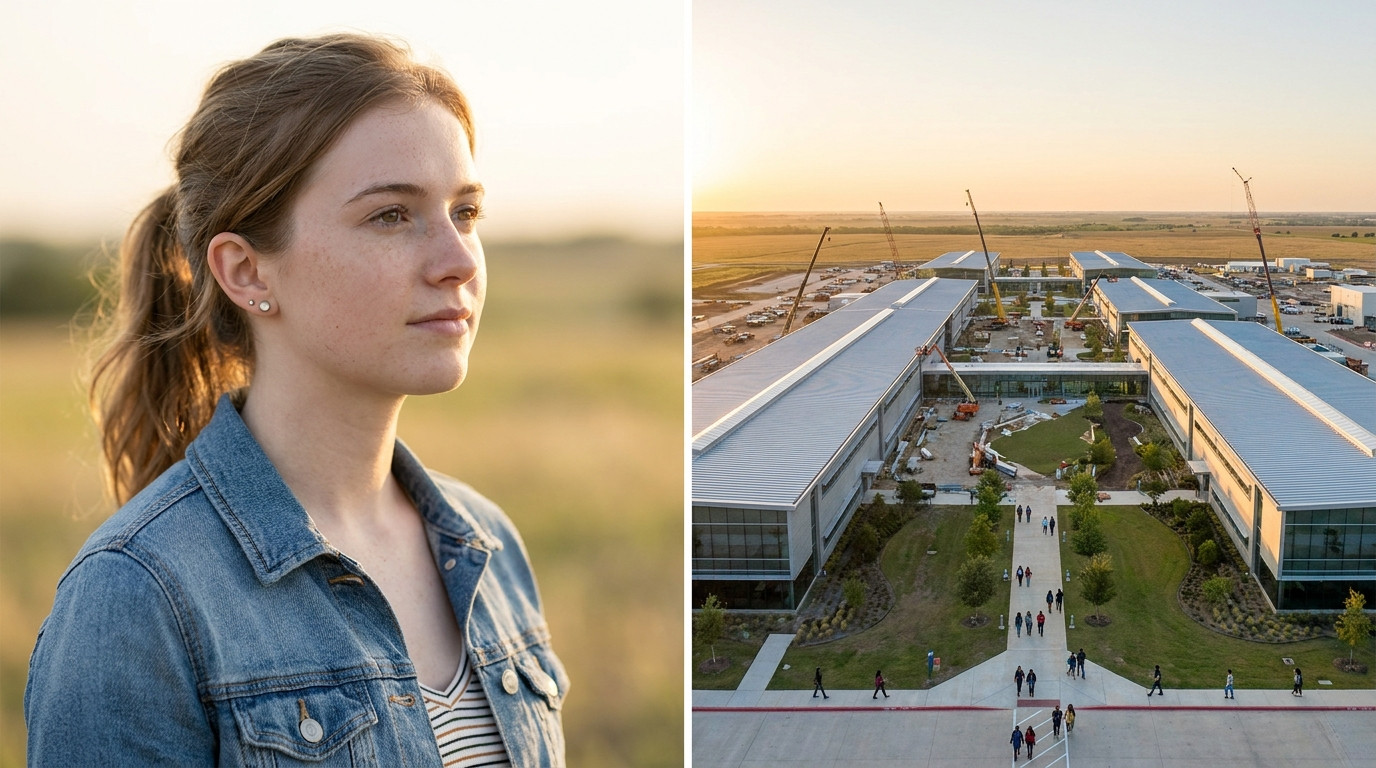
A Texas Instruments internship is a paid, 10-to-12-week summer placement inside the world's largest analog semiconductor company, the firm whose chips sit in roughly 80% of all electronic devices on Earth. Interns join one of a dozen engineering tracks at major U.S. design centers and fabrication sites, working on real product development from day one. And the scale is massive: TI hires 1,000+ interns annually, operates the largest intern cohort in the semiconductor industry, and runs formal mentorship pairing plus a social programming calendar that fills the entire summer. Reviews back the brand up: Glassdoor intern ratings sit at 4.5 to 4.7 out of 5, and returning interns receive a $1,000 bonus. But what truly sets TI apart is the $60 billion CHIPS Act expansion across four new Sherman, Texas mega-fabs, which means your intern project could land on silicon shipping from a factory that didn't exist two years ago.
When Do Texas Instruments Internship Applications Open for 2027–2028?
TI's recruiting calendar is rolling but front-loaded. In the documented previous cycle, summer 2026 postings opened in fall 2025 once the Oracle Cloud portal refreshed with requisitions, and the highest-priority review window ran through early-to-mid October. Projected from that pattern, applications for summer 2027 were expected around mid-August 2026; the wave actually posted September 1 to 28, 2026, so priority review likely runs through October 2026. But because TI fills positions on a rolling basis, the best roles can close well before the soft November close. Career-fair season (September through October) is when the most recruiter activity happens at target schools. So for summer 2027 you apply in fall 2026, roughly 10 months before the June start, and the first three weeks of the window matter most.
Applications for summer 2027 are open. Between September 1 and 28, 2026 TI posted its degree-track intern wave, 63 US requisitions without a year in the title live on October 2: Analog IC Design, Digital IC Design and Design Verification (Bachelors and MS/PhD versions), Software Engineering, Systems, Product, Test, Packaging, Process Development and Manufacturing Engineering, Sales and Field Applications Engineering, IT, and business tracks. The titles carry no year and the reqs print no close date, so apply to your 5 to 8 best-fit reqs now; high-demand tracks have historically closed by November. Two more requisitions, the Manufacturing Technician roles, say 2027 (Apply Before November 30, 2026).
Prep window: brush up analog circuits, embedded systems, or VLSI coursework. Build a project in C on a real microcontroller (MSP430 or ARM Cortex). Learn SPICE simulation and Cadence or Synopsys tools if your program offers access.
This is when TI's degree-track summer 2027 postings went live: September 1 to 28, 2026, titled without a year (only the two Manufacturing Technician reqs carry 2027). Applications submitted in the first weeks of a posting receive the highest response rates. Apply to 5 to 8 positions across multiple tracks. Attend TI info sessions and the Engineer Your Future workshop at target schools for direct interview access.
Rolling interviews: ATS screening advances about 40 to 50% of applicants, then a recruiter phone screen (20 to 30 min), HackerRank OA (90 to 120 min, MCQ plus coding on circuits and C), and a technical phone interview (45 to 60 min with a senior TI engineer). Average time from application to offer: 22 days.
10 to 12 weeks, June to August. Real project ownership on production analog and embedded circuits. Present results to your team, earn a $1,000 returning-intern bonus if you come back, and position for a return offer (50 to 75% historically).
How to read this page: our dates come from tracking previous recruiting cycles and daily posting data. Treat them as informed estimates based on historical patterns, not confirmed dates. The company's official careers page is always the most current source. If a role is posted there, go by that, even if this page suggests the window hasn't opened yet.
Why You Must Apply the Week Applications Open
TI reviews applications on a rolling basis, and community data is consistent: applications submitted in the first three weeks of fall semester receive disproportionately higher response rates than later submissions. Why? Because TI fills positions individually rather than in cohorts. Once a hiring manager finds a strong candidate for a specific role, that posting closes whether the broader window is still open or not. By November most high-demand tracks (analog IC design, embedded software) are filled, and only stragglers remain. And because the OA is sent automatically after ATS screening, early applicants also start the interview pipeline sooner, meaning they compete against a smaller pool of candidates who've cleared the technical bar. So what does this mean practically? Apply in week one of the window, attend a fall info session for priority access, and submit to multiple tracks simultaneously.
Which Texas Instruments Internship Programs Should You Target?
TI's 1,000+ intern cohort spans more than a dozen engineering tracks plus supporting business functions. Which track should you target? The answer depends on whether your strength is closer to transistors or to firmware, because each track interviews against its own technical vocabulary and TI's interview process tests domain knowledge rather than generic algorithms.
| Track | Focus | Duration | Key skills |
|---|---|---|---|
| Analog/Mixed-Signal IC Design | CMOS circuit design, op-amps, power management, data converters | 10–12 weeks | SPICE, Cadence, op-amp theory, CMOS fundamentals, Razavi-level coursework |
| Embedded Software Engineering | C/C++ firmware, microcontroller programming (MSP430, C2000, ARM Cortex), RTOS | 10–12 weeks | C programming, embedded systems, I2C/SPI/UART protocols, debugging |
| Digital IC Design | Verilog/VHDL, RTL coding, ASIC/FPGA design, timing analysis, verification | 10–12 weeks | SystemVerilog, Synopsys/Cadence EDA, FPGA (Quartus), formal verification |
| Product/Test Engineering | Test development, yield enhancement, chip characterization, production specs | 10–12 weeks | MATLAB, statistical analysis, lab equipment, Python scripting |
| Manufacturing/Process Engineering | Wafer fab process optimization, cycle time, equipment engineering (Sherman mega-fab) | 10–12 weeks | Semiconductor physics, SPC, process integration, cleanroom protocols |
| Applications Engineering | Customer design support, reference designs, technical marketing, system-level solutions | 10–12 weeks | Breadboarding, oscilloscope skills, analog fundamentals, customer communication |
See all tracks on the official TI students page. And note the separate pathways: the standard summer internship is 10 to 12 weeks, but co-op placements (16 to 24 weeks in fall or spring) offer deeper project continuity, and the Career Accelerator Program (CAP) is a 12-month full-time rotational for new graduates.
What Are the Eligibility Requirements?
TI publishes consistent requirements across all intern postings:
• Enrollment: currently pursuing a BS, MS, or PhD in Electrical Engineering, Computer Engineering, Computer Science, Physics, Materials Science, Chemical Engineering, or Mechanical Engineering. Sophomore through PhD level; graduation windows of roughly December 2027 through June 2029 fit summer 2027 roles, projected from the summer 2026 cycle.
• GPA: 3.0 out of 4.0 cumulative is the hard minimum. The ATS screens you out below this threshold. Competitive candidates typically hold 3.5 or higher.
• Work authorization: open to U.S. citizens, permanent residents, and international students. CPT authorization from your school is sufficient for internships (no employer petition needed). TI actively sponsors H-1B for full-time conversion (122 petitions filed and approved in FY2025).
• Drug test and background check: yes to both. Pre-employment drug screening may occur on the same day as your interview or shortly after offer acceptance.
• Availability: the full 10 to 12 weeks for summer, or 16 to 24 weeks for a co-op rotation.
Does TI Have a Hard GPA Cutoff?
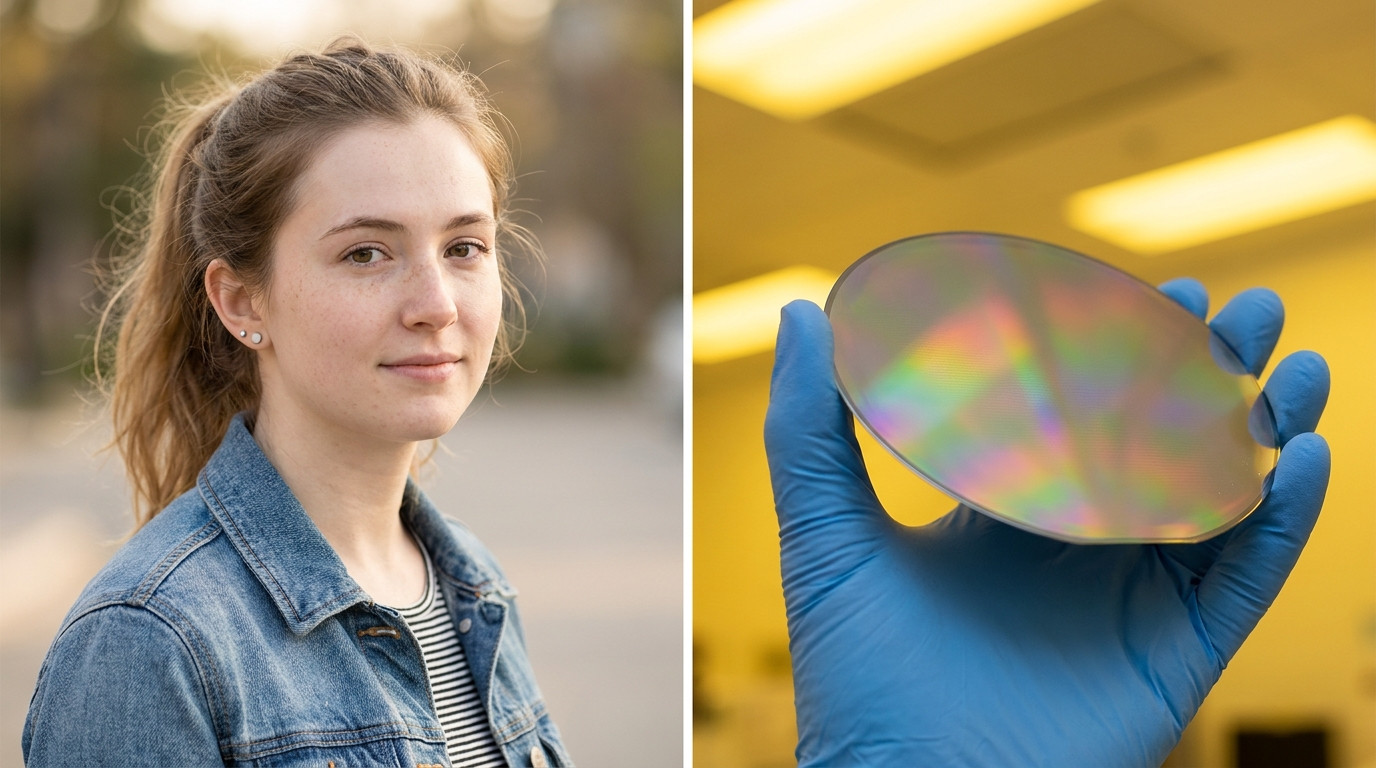
Yes, and it is enforced by the ATS before a recruiter ever sees your resume. Every TI intern posting lists 3.0 out of 4.0 as the minimum cumulative GPA. Below that line, your application is automatically filtered. But hitting the floor is not enough to be competitive: Glassdoor and LinkedIn data suggest successful candidates typically hold 3.5 or above, and roughly 85% of TI interns come from target schools (UT Austin, Georgia Tech, MIT, Stanford, CMU, Berkeley, UIUC, Waterloo). So what actually differentiates you above the 3.0 line? Strong EDA tool experience, a finished embedded or analog project, and relevant coursework in semiconductor physics or circuit design. Because TI interviews on domain knowledge rather than LeetCode, demonstrable hardware skills can partially compensate for GPAs in the 3.0 to 3.4 range.
Profile Match · Extern Data
Could You Get In at Texas Instruments? Compare Your Profile
Based on 403 software engineering interns who started their first software internship between 2024 and 2026 (public LinkedIn profiles, aggregated). Six questions, under a minute.
Which summer are you applying for?
Recruiting timelines differ by class year, so we compare you with the right group.
Which group is your school closest to?
Firms recruit on campus in tiers. We match you against admits from schools like yours.
Is your major computer science, software engineering, data science or electrical engineering?
Almost every software intern in our data studied one of these. Other majors get in, but the coursework has to show elsewhere.
How many internships, externships or research positions have you held so far?
Count anything with a real employer, mentor or principal investigator attached. Retail and food service do not count.
Has any of that experience been tech-related?
Software, data, IT, engineering or a research lab. Any size of company counts.
Do you have at least one project on your resume or LinkedIn?
Personal, class, hackathon or open-source projects all count.
Aggregated from public LinkedIn profiles of people who held the internship. No individual profile is shown. Read the cross-industry study of 2,500+ intern profiles.
What Skills Does Texas Instruments Look For, and How Do You Build Them?
Ten real TI intern job descriptions tell a clear story about what the hiring bar looks for. C programming appears in 80% of postings. Embedded systems concepts, 60%. C++, 60%. MATLAB or Simulink, 60%. But the critical differentiator versus software tech companies is this: TI places almost no emphasis on LeetCode-style algorithmic challenges. The technical bar tests semiconductor fundamentals, circuit analysis, hardware-software interaction, and EDA tool proficiency instead. So if your resume reads like a web-developer portfolio, you need to reframe before you apply.
What Texas Instruments looks for in interns
Skills across 10 Texas Instruments intern & analyst job descriptions · 2024–2026 TI intern JDs, projecting 2027–2028
Method: full-text analysis of 10 real TI intern job descriptions from careers.ti.com, Glassdoor, Prosple, and GeeksforGeeks interview reports (2024–2026 postings). Counts represent distinct role postings mentioning each skill.
How Is Demand for Engineering Interns Moving Right Now?
Mechanical engineering intern postings · Sep vs Aug 2026
vs 207 in August
For Texas Instruments applicants: Mechanical engineering intern hiring picked up sharply in September; apply within the first week a role posts, while the most seats are open.
Daily US job-posting counts, Sep 1–30 vs Aug 1–31, 2026. Covers under half of US postings; shows direction, not market size. Pay = median of employer-published ranges only (87 postings in September, 36 in August).
Build These Skills Before You Apply
And every skill in the chart maps to a remote Externship where you finish a real company project you can cite in your application.
| Skill (from real JDs) | JD evidence | Externship that builds it |
|---|---|---|
| Embedded systems and C programming | 80% of TI JDs: "C programming," "embedded systems," "microcontroller firmware," "RTOS" | Wayfair AI Agent Engineering |
| IoT security and hardware-software integration | 60% of TI JDs: "embedded systems," "I2C/SPI/UART protocols," "system integration" | Hydroficient IoT Cyber Defense |
| Systems-level engineering and debugging | 50% of TI JDs: "debugging," "lab equipment," "system architecture," "cross-functional collaboration" | Explore all engineering Externships |
How close is the overlap? The Wayfair deliverable is production-grade agent engineering in the systems vocabulary TI's embedded track interviews against, and the Hydroficient project ends on IoT security work that maps directly to the I2C/SPI protocol line items five of ten JDs share. Both give your resume completed project evidence for a fall application.
What Is the Texas Instruments Application and Interview Process Like?
TI's interview funnel is shorter than most tech companies, averaging 22 days from application to offer. But the technical content is domain-specific rather than algorithm-focused, so generic LeetCode prep will not help you here:
1. Apply at careers.ti.com with a resume. No cover letter is required. Tailor your resume to hardware and EE (emphasize op-amp projects, EDA tool experience, embedded coursework). Apply to 5 to 8 positions across multiple tracks.
2. ATS screening and recruiter phone screen. The ATS advances about 40 to 50% of applicants past the 3.0 GPA and keyword filter. A recruiter then calls (20 to 30 min) to confirm logistics, role fit, and pay expectations.
3. HackerRank Online Assessment (90 to 120 minutes). Format: MCQs plus coding problems. Content covers C programming, digital logic, and circuit fundamentals for hardware roles, or data structures and embedded concepts for software roles. This is NOT LeetCode-style. Expect op-amp gain calculations, MOSFET small-signal models, volatile keyword usage, and FSM design. Negative marking applies on MCQ sections.
4. Technical phone or video interview (45 to 60 min). One-on-one with a senior TI engineer. Questions tie to your resume projects and test circuit fundamentals for EE roles or C programming depth for embedded roles. Atmosphere is described as "conversational" rather than adversarial.
5. Panel interview (select competitive roles). A 3-to-4-hour superday with separate 45-minute sessions covering technical depth, breadth, and behavioral/manager assessment. Only required for the most competitive analog design positions.
The overall difficulty rating on Glassdoor is 3.0 out of 5, with 73% positive experiences and an average time to hire of 22 days across 118 intern interview reports. Because TI interviews on domain knowledge, the best preparation is re-reading Razavi (analog) or Valvano (embedded systems using TI microcontrollers) rather than grinding algorithmic problems.
What Students on Reddit Say
Three community threads show the process from the inside.
The OA was heavy on C and circuits. Op-amp gain, MOSFET models, and one coding question on bit manipulation. If you know your analog fundamentals you'll be fine, but it's nothing like a typical SWE HackerRank.
Work-life balance is genuinely good here. 40-hour weeks, nobody pings you at midnight. Pay is below FAANG but Dallas cost of living makes it equivalent and Texas has no income tax.
Got assigned to a real product team from day one. My work ended up in a chip that shipped six months later. The learning curve is steep but the mentorship is solid if you ask for it.
How Do You Stand Out When 8–12% of Applicants Get Offers?
Three moves, all executable this fall. First, apply in the first three weeks of fall semester; rolling review plus individual position filling makes timing itself a filter. Second, reframe your resume in TI's technical vocabulary: op-amp projects, SPICE simulations, C firmware on real hardware, and EDA tool names (Cadence, Synopsys) are the keywords the ATS and human reviewers both scan for. Third, show up with proof in the JD's exact language. A finished embedded or IoT security project answers "tell me about your coursework" with a shipped deliverable instead of a grade. And remember the return-offer rate is 50 to 75%. Interview like someone auditioning for a full-time seat at the world's largest analog chipmaker, because you are. One more advantage: TI's Engineer Your Future workshops at target schools offer direct interview access outside the standard pipeline, so attend one if your campus is on the list.

What Other Companies Should You Consider?
TI's peer set is the semiconductor industry itself. If you want analog and embedded depth, TI is the benchmark. But here's how the other chip companies compare.
- AMDGPU and CPU design; higher comp but narrower analog exposureGuide →
- NvidiaAI/GPU focus; highest comp in semis but heavily software-weightedGuide →
- QualcommMobile SoC leader; strong RF and modem tracks, San Diego baseGuide →
- IntelBroadest track variety; recent layoff volatility but massive scaleGuide →
- BroadcomNetworking and enterprise chips; smaller intern class, strong compGuide →
For the wider field, see our tech internships summer 2027 guide.
TI's unique advantage in this peer set is structural: no state income tax in Texas, the largest analog market position globally, and $60 billion in active fab expansion creating long-term job security that no other semiconductor employer can match right now. Our engineering internships guide maps the full landscape across the tech hub.

FAQ
Can I still apply for a summer 2026 texas instruments internship?
That cycle is essentially over. Summer 2026 roles were filled from postings that opened in fall 2025, and by now only rare late or off-cycle postings surface. The cycle to target is summer 2027. TI posted its degree-track summer 2027 wave between September 1 and 28, 2026, and on October 2 its board carried 63 US intern requisitions (titled without a year), plus two 2027-titled Manufacturing Technician intern roles for associate-degree and certificate students (Apply Before November 30, 2026). Apply now; high-demand tracks (analog IC design, embedded software) have historically closed by November.
How hard is it to get a Texas Instruments internship?
The acceptance rate is estimated at 8 to 12% overall (application to offer). TI hires 1,000+ interns annually from a large applicant pool. ATS screening advances about 40 to 50% of applicants past the GPA and keyword filter, and the final offer rate after interviews is about 30 to 40% of those who reach the technical rounds.
Does Texas Instruments sponsor visas for international students?
Yes. For internships: CPT authorization from your school is sufficient (no employer petition needed). For full-time: TI actively sponsors H-1B visas and filed 122 petitions with 122 approved in FY2025. TN visas are also accepted for Canadian and Mexican engineers. STEM OPT extension makes you eligible for 3 years total OPT for STEM degrees.
What does the Texas Instruments HackerRank OA look like?
The OA runs 90 to 120 minutes on HackerRank. Format is MCQs plus coding problems. Content covers C programming, digital logic, and circuit fundamentals (op-amp gain, MOSFET models, Bode plots) for hardware roles, or data structures and embedded concepts for software roles. This is NOT LeetCode-style. Negative marking applies on MCQ sections, so guessing is penalized.
What GPA do I need for a TI internship?
3.0 out of 4.0 is the hard minimum enforced by the ATS. Below that line your application is automatically filtered before a recruiter sees it. Competitive candidates typically hold 3.5 or above. Strong projects, relevant coursework, and EDA tool experience can partially compensate for GPAs in the 3.0 to 3.4 range.
How much does a Texas Instruments internship pay?
Hourly rates range from $28 to $47 depending on degree level, role, and location. Software engineering interns (MS, Santa Clara) earn up to $47.50 per hour. Hardware engineering interns in Dallas earn $35 to $36 per hour. A housing stipend of $2,300 to $8,000 covers relocation. And because Texas has no state income tax, your take-home pay in Dallas is effectively equivalent to a much higher gross in California.
Does Texas Instruments give return offers?
Yes. Community-reported conversion rates range from 50 to 75%. Return offers typically come with full-time total compensation of $120K to $160K. Performance during the internship and team headcount are the key factors. Returning interns also receive a $1,000 bonus. These are community figures, not officially published by TI.
Where are Texas Instruments internships located?
The primary U.S. intern hub is Dallas, Texas (company HQ at 12500 TI Blvd). Other major locations include Sherman TX (the $40B mega-fab expansion with four new fabs), Richardson TX (300mm wafer fabs), Tucson AZ (analog design center), Santa Clara CA (higher compensation), and Lehi UT (300mm fabs). Dallas-area interns benefit from no state income tax and a cost of living roughly 40 to 50% below the Bay Area.
The window is rolling and the first three weeks matter most. Spend the runway building proof: a remote Externship in embedded engineering or IoT security turns "interested in semiconductors" into a finished project a fall application can point at.
About the Author
Bifei Wang has spent 17 years focused on human flow and the growth of young professionals, spanning international education, career training and coaching, and recruitment process outsourcing. Over 7 years at Extern, he has had one-on-one sessions with thousands of students exploring careers in consulting, finance, tech, marketing, and data, giving him a firsthand view of how the job market has shifted for early-career professionals and what it actually takes to break in.