CS Internships for Freshmen and Sophomores: Your 2026 Playbook
TL;DR
• Dozens of tech companies run CS internship programs built specifically for freshmen and sophomores in 2026. Most applications open between August and October 2025 for summer spots. According to NACE's 2026 Internship & Co-op Report, the intern-to-full-time conversion rate hit 63.1% for 2024-25 interns. That makes early-start programs more valuable than ever.
• This guide covers 15+ underclassmen-specific programs, month-by-month application timelines, resume strategies for students with zero professional experience, and alternatives like Externships that build real skills when traditional internships aren't available.
• You don't need a perfect GPA or three side projects to get started. Targeted applications and the right prep matter more than volume.
• The biggest mistake underclassmen make? Waiting until sophomore spring. The best programs close months before that.
Externships are short, remote professional experience programs where you work on real projects with real companies. Explore CS-adjacent Externships: Wayfair AI Agent Engineering | Pfizer AI & Data Extraction | Explore all Externships →
What Are Underclassmen CS Internships?
If you're a freshman or sophomore studying CS, the standard internship job boards can feel like they're written for someone else. Most listings want juniors who've already cleared data structures, algorithms, and two summers of experience. But more companies than you'd expect have built programs specifically for students like you. Here's what those look like.
How Underclassmen Programs Differ From Standard Internships
An underclassmen CS internship is a paid summer program that accepts first-year and second-year students who haven't finished upper-level CS coursework yet. Think of it as the on-ramp version. These programs use rotational formats, pair you with a dedicated mentor, and keep the technical interview bar lower than what you'd face for a standard SWE internship. And the focus is on potential and curiosity, not polish.
According to NACE, more than 70% of organizations expected to increase or maintain intern hiring in 2025. And early-pipeline programs are a growing piece of that. Companies aren't running these because they're generous. They're building a talent funnel. And they want you in it before your junior year, when every other company starts competing for the same students.
Why Tech Companies Recruit Freshmen and Sophomores
It comes down to retention economics. That NACE conversion rate of 63.1% means companies turn roughly two out of every three interns into full-time hires. So locking in promising students before competitors do saves recruiting costs and builds brand loyalty. Diversity pipeline goals matter too. Programs like Microsoft Explore and Google STEP explicitly aim to reach students from underrepresented backgrounds who might not apply to standard SWE roles as freshmen.

Which Companies Offer CS Internships for Freshmen and Sophomores in 2026?
More companies than you'd think run underclassmen-specific programs, and honestly, the list keeps growing every year as more firms realize early recruiting works. Here are the standout programs worth knowing about, followed by a full comparison table.
Microsoft Explore Program
Microsoft Explore is probably the most well-known underclassmen CS internship out there, and for good reason. It's a 12-week rotational program where you spend time across software engineering, program management, and design. That rotation matters. It helps you figure out which track fits before committing for your junior-year internship, and that kind of clarity is hard to get any other way. The program is based in Redmond, Washington, and it's open to both first and second-year students.
Pay is solid. According to Levels.fyi, Explore interns earn approximately $34/hour, which works out to roughly $5,400/month before the housing stipend kicks in. Applications typically open in August and close by late October, so mark your calendar early.
Google STEP (Student Training in Engineering Program)
Google STEP (formerly Engineering Practicum) is Google's 12-week program for first and second-year undergrads. You'll get paired with a host engineer and a co-intern to work on a real project. Not a toy project. A real one. Structured mentorship is baked into every single week of the program, which is part of what makes it so different from applying to a standard SWE role.
Here's the hard truth: STEP is extremely competitive. According to InterviewQuery's analysis, the estimated acceptance rate sits between 1.5% and 5%. That's tighter than most top universities. Yet Google says they're looking for potential and curiosity, not technical perfection. So if you can show strong problem-solving skills and genuine interest, you've got a real shot.
Capital One Technology Internship Program
Capital One's technology internship is one of the few major programs that explicitly says "yes, freshmen welcome." You'll work on real software engineering projects within their banking tech stack. The program runs 10 weeks during the summer, with spots in McLean (Virginia), Plano (Texas), and New York.
What makes it stand out for underclassmen: the interview process is more approachable than FAANG-tier programs. Expect a behavioral screen plus a coding challenge. But the difficulty accounts for the fact that you probably haven't taken algorithms yet, which matters a lot.
More Programs Worth Applying To
Beyond those three, several other companies run quality programs for underclassmen. Here's the broader landscape (a detailed comparison table with specifics follows below):
Key programs to look into include Meta University (8 weeks in Menlo Park), Amazon Propel (focused on first-generation and underrepresented students), JPMorgan Chase's Sophomore Fellowship (a 5-week finance-tech hybrid), Salesforce Futureforce Tech Launchpad (full-stack web dev for sophomores), Five Rings SDE Workshop (a 5-day intensive for sophomores in NYC), MLH Fellowship (12-week remote open-source alternative), and Bank of America's Sophomore Summer Analyst Program.
Each has different eligibility windows, locations, and technical expectations. For application links and resume templates, cross-reference with Extern's FAANG internship guide.

How Can You Get a CS Internship as a Freshman With No Experience?
This is the question, right? You've got no internship history, maybe one semester of coursework, and you're staring at applications that ask for "relevant experience." It's doable. You just need a different strategy than what juniors use.
Build One Strong Project Before You Apply
So let's start with the most impactful thing you can do right now. One finished, deployed project beats ten half-baked repos. Pick something you're genuinely curious about: a personal website, a CLI tool, a web app, or a script that solves a real problem for a campus club. Push it to GitHub with a clean README, clear commit history, and enough documentation that someone else could understand what you built and why.
You don't need to reinvent anything. A to-do app with authentication, a weather dashboard using a public API, or a Chrome extension that does something useful will all work. Yet the point isn't complexity, and this is where a lot of freshmen overthink it. It's proving you can take a project from idea to shipped product, start to finish.
Use Campus Resources That Most Students Skip
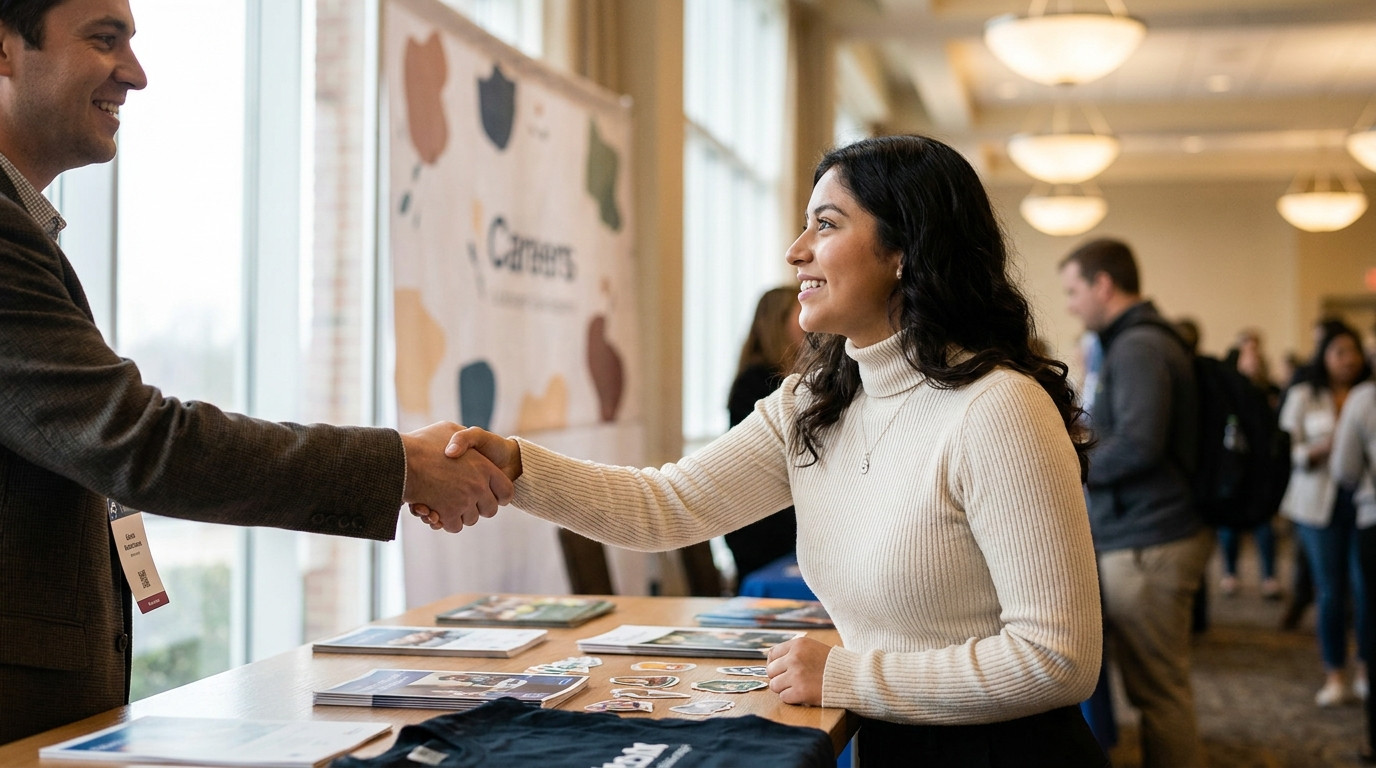
Your university's career center, CS department events, and student tech clubs are genuinely underrated. Seriously. Career fairs give you face time with recruiters who specifically handle underclassmen pipelines, and that direct access is hard to replicate through online applications alone. Professor recommendations carry real weight too, especially if you've been active in class or visited office hours a few times. And hackathons are a two-for-one deal: you build a project and meet other motivated students who share internship leads.
According to Handshake's employer survey data, students who attended at least one employer event were significantly more likely to receive interview invitations than those who only applied online. Showing up still counts for a lot, and it's one of those things that sounds too simple to work until you try it.
For a full walkthrough on the application process, check out Extern's How to Apply for Internships guide.
Tailor Every Application (the Spray-and-Pray Trap)
But here's what most freshmen get wrong about volume. Sending 200 identical applications will almost always lose to sending 20 targeted ones. For each company, spend 15 minutes researching their specific underclassmen program, what tech stack they use, and what intern projects typically involve. And mention something concrete in your essays or cover letter. Recruiters can tell the difference between "I'm passionate about technology" and "I noticed Capital One's intern cohort built a fraud detection feature last summer, and I'd love to work on something similar."
When Should You Apply for 2026 CS Internships?
So timing catches more freshmen off guard than anything else. The windows are earlier than most people expect, and missing them means waiting a full year.
The Underclassmen Internship Timeline (Month by Month)
Summer 2026 CS internship recruiting follows a predictable pattern. Big Tech opens first, then finance, then mid-size companies and startups:
July to August 2025: Microsoft Explore, Google STEP, and Meta University applications go live. Have your resume ready and your project on GitHub before this window opens.
September to October 2025: Peak application season. Capital One, Amazon Propel, Salesforce Futureforce, and Five Rings typically open during this stretch.
November to December 2025: JPMorgan, Bank of America, and other finance-adjacent tech programs accept applications. Many Big Tech programs close by late November.
January to February 2026: This is when mid-size companies and well-funded startups start posting roles, and there's less competition here with more flexibility on qualifications than you'll find at the Big Tech tier.
March to April 2026: Last-chance opportunities at startups, government labs, and smaller tech firms that don't follow Big Tech's recruiting calendar. Also a solid window for Externships and open-source fellowships like MLH.
A detailed comparison table with specific program dates is included below. Bookmark it and set calendar reminders now, because you won't remember to check back in August otherwise.
What to Do If You Missed the Early Deadlines
If you're reading this in spring 2026 and Big Tech windows have closed: take a breath. Not ideal, sure. But mid-size companies, startups, and government research programs recruit through March and sometimes well into April, so you've still got options if you move quickly. Extern's spring recruiting guide covers those paths in detail.
And Externships accept applications year-round. Unlike traditional programs with fixed cohorts, you can start an Externship any time and still gain resume-ready professional experience.
What Should Your CS Internship Resume Look Like as an Underclassman?
Your resume is probably the biggest source of anxiety right now. You're staring at a blank page, thinking you've got nothing to fill it with. You do. I'd argue you have more material than you realize, and the issue isn't a lack of content but rather knowing which experiences actually count in the eyes of a recruiter or an ATS system screening your application.
What to Put on Your Resume When You Have Zero Experience
Lead with education (school, expected graduation, GPA if it's above 3.3, relevant coursework). Then fill your experience section with things you've actually done:
• Personal projects: That GitHub project you built. Describe it with impact verbs and technical specifics. "Built a React weather dashboard using OpenWeather API; deployed on Vercel with CI/CD pipeline" tells a recruiter something real.
• Coursework projects: If your intro CS class had a substantial final project, include it.
• Hackathon projects: Even a 24-hour hack counts, especially if your team placed.
• Club leadership: VP of your school's ACM chapter, hackathon organizer, tutoring coordinator.
• Technical skills: Python, Java, JavaScript, Git, SQL. Only list languages you've actually used.
For a deeper dive, Extern's freshman internship resume guide has templates built for students with limited experience.
Formatting That Passes ATS Filters
According to Jobscan's 2026 analysis, roughly half of all resumes fail initial ATS screening before a human ever sees them. For underclassmen, the fix is straightforward: use a single-column layout, standard section headers (Education, Experience, Skills, Projects), skip the graphics and tables, and save as PDF.
Here's the part people miss: include keywords from the job description verbatim. If the posting says "Python" and "data structures," your resume should say exactly that. Not "programming" and "algorithms." ATS systems are literal matchers, and they're not going to connect the dots for you. So keep it simple and mirror the exact language from the posting.
What If You Can't Find a CS Internship?
Let's be real about something: not getting a traditional internship as a freshman or sophomore is completely normal, and it's way more common than your LinkedIn feed would have you believe.
Why Not Landing an Internship Isn't a Career Death Sentence
The narrative that you need an internship every summer starting freshman year is overblown. Plenty of successful software engineers spent their first college summers doing something other than a formal program. That's just true. And what matters is that you're building skills and gaining experience you can articulate clearly in an interview, because the specific format matters far less than the substance of what you actually learned and built.
But doing nothing isn't the move either. The students who struggle during junior-year recruiting are usually the ones who spent two summers without any resume-building activity at all.
5 Alternatives That Build Real Skills
If traditional CS internships aren't working out this cycle, these alternatives carry legitimate resume weight:
1. Remote Externships: An Externship through Extern lets you work on real projects with companies like Amazon, Pfizer, and Wayfair. They're fully remote, don't require prior experience, and you walk away with tangible deliverables you can reference in future applications. For CS students specifically, the Wayfair AI Agent Engineering Externship has you building actual AI tools with real business data.
2. Open-source contributions: Programs like Google Summer of Code and MLH Fellowship give you structured open-source experience. Even outside those programs, meaningful contributions to popular repos show you can work with other people's code. And that's half the job, honestly.
3. Research with professors: Email three to five CS professors whose work interests you. Many run research projects that need undergrad help, especially in machine learning, systems, and HCI. Research experience carries more weight than most students realize.
4. Hackathons and competitions: Finishing a hackathon project shows you can build under time pressure, collaborate, and ship. Major League Hacking runs events year-round.
5. Freelance or contract projects: Built a website for a local business? Automated something for a student org? That's professional experience if you frame it right.
How Externships Give Underclassmen a Head Start
Here's the catch-22 with traditional internships: you can't get one without experience, and you can't get experience without one. Externships break that loop. They don't require prior professional experience, and that's the whole point. They're typically 8 weeks, fully remote, and you're paired with a mentor (called an extern manager) who guides your project work from start to finish.
The deliverables you produce are yours to keep and show off. That means you walk into junior-year recruiting with a portfolio of company-endorsed projects instead of a blank resume section.
How Do Externships Compare to Traditional CS Internships?
This question comes up constantly from underclassmen weighing their options, and the honest answer is that both formats have real value. The right choice depends entirely on where you are right now and what you're trying to accomplish this semester or summer.
Externship vs Internship for Underclassmen: Side by Side
The core differences: a traditional CS internship runs 10 to 12 weeks, usually on-site (sometimes hybrid), paid hourly or salaried, and requires passing a competitive application with technical interviews. An Externship is shorter (usually 8 weeks), fully remote, project-based with a specific deliverable, and open to students at any experience level.
For underclassmen who can't land a traditional internship or who want to stack experience across multiple semesters, Externships offer a lower-barrier path to the same outcome: resume-ready professional experience. The full breakdown is in Extern's Externship vs. Internship guide.
A detailed comparison table with duration, location, compensation, experience requirements, resume value, and flexibility is included in the code embed section below.
When an Externship Makes More Sense Than an Internship
You missed the deadlines. Traditional programs fill their cohorts by November or December, and once those spots are gone, they're gone until next year. Externships accept applications year-round.
You can't relocate. Most major CS internships need you in a tech hub for the summer. Externships are fully remote.
You want to try multiple fields. Instead of one company for 12 weeks, you could do two Externships in different areas (say, AI engineering and data analytics) in the same time frame.
You're building a base for junior-year apps. Even one professional experience on your resume changes the recruiter response rate dramatically. And sometimes, honestly, that single line item is all it takes to transform how recruiters perceive your entire application.
What Mistakes Do Freshmen Make When Applying for CS Internships?
And knowing what to avoid saves almost as much time as knowing what to do. These are the three patterns that trip up first-year CS applicants the most, and they're all completely fixable once you see them coming.
Only Targeting FAANG (and Missing Mid-Tier Goldmines)
Google STEP's acceptance rate hovers between 1.5% and 5%. Microsoft Explore is similarly selective. So putting all your energy into FAANG is a losing bet for most students. The better move: apply to five to eight underclassmen-specific programs at top companies, then add ten to fifteen applications at mid-size companies and well-funded startups where the odds are much better. Companies like Datadog, Stripe, Plaid, and Cloudflare run excellent intern programs with far less competition.
Waiting Until Sophomore Spring
This is the single most common mistake, and it's the one that costs students the most opportunities they'll never even know they missed. By the time most sophomores start thinking about summer internships in February or March, every major underclassmen program has already filled its spots. The timeline section above lays it out: August through October is the critical window. If you're a current freshman reading this, set a reminder for July to start polishing your resume.
Ignoring Behavioral Interview Prep
Underclassmen programs weight behavioral interviews more heavily than traditional SWE roles, and this catches a lot of technically-prepared students off guard. Companies already know you haven't taken algorithms. What they're really evaluating is your communication, your teamwork instincts, and whether you can walk through how you approach a problem you've never seen before. Practice the STAR method (Situation, Task, Action, Result) with three to five stories from school projects, clubs, or part-time work. And you'll use those stories more than LeetCode at this stage, which might sound surprising if you've been grinding coding problems for weeks.

How to Set Yourself Up for Junior-Year Recruiting Right Now
Everything you do as a freshman or sophomore compounds. The students who land top junior-year internships aren't fundamentally smarter or more talented. They just started earlier, and that head start compounds in ways that aren't obvious until recruiting season hits.
What to Do This Summer Even Without an Internship
Here's your checklist if you don't have a formal internship lined up:
1. Build or finish one portfolio project. Push it to GitHub with a clean README that explains what the project does, why you built it, and how to run it locally.
2. Contribute to one open-source project. Even a small bug fix or documentation PR counts, and it shows you can work in someone else's codebase.
3. Start an Externship. Browse current Externships on Extern.com that match your interests and apply before summer ends.
4. Begin data structures and algorithms prep. You'll need this for junior-year technical interviews, and starting now means it won't feel like cramming when October rolls around.
5. Attend at least one virtual tech event or meetup. Build your network before you need it, because the best time to make connections is when you're not desperate for a referral.
The Compound Effect of Starting Early
According to Handshake's 2026 early talent report, students who gained any form of professional experience before junior year received roughly twice as many interview invitations during junior-year recruiting compared to peers with no prior experience. That's the compound effect in action.
You're not behind if you're reading this as a freshman or sophomore. The fact that you're researching underclassmen CS internships right now already puts you ahead of most of your classmates who won't think about this until it's too late.
So start with one thing this week. Polish your resume, or push a project to GitHub, or apply to one program. Pick one. The rest follows from there, and it'll feel a lot less overwhelming once you've taken that first step.
FAQ
Can freshmen get CS internships?
Yes. Companies like Microsoft (Explore), Google (STEP), Capital One, and Meta run programs specifically designed for first-year CS students. Most open applications between August and October, so start preparing the summer before freshman year begins. It's competitive, but these programs exist because companies want to find you early.
How do I get a CS internship with no experience?
Put one solid project on GitHub with a clean README. Build your resume around coursework, transferable skills, and club leadership, then target programs designed for underclassmen instead of general SWE roles. And don't sleep on career fairs and professor referrals, because those connections open doors that hundreds of cold applications alone simply won't.
When do 2026 CS internship applications open?
Big Tech underclassmen programs typically open between August and October 2025 for summer 2026 spots. Banks and consulting firms follow in October through November. Mid-size companies and startups recruit from January through March, which gives later applicants more runway.
What's the difference between an Externship and an internship?
An Externship is a short, remote professional experience focused on project-based learning with real companies. Internships tend to be longer, usually on-site, and often require relocation. Externships don't need prior professional experience, which makes them a realistic option for freshmen who can't land traditional programs yet.
Are underclassmen CS internships paid?
Most major programs at companies like Microsoft, Google, and Capital One are paid, with compensation typically running between $5,000 and $9,000 per month depending on the company and location. Smaller companies and nonprofits may offer stipends or be unpaid. Externships use a different model entirely, focused on skills development and producing resume-ready deliverables rather than hourly compensation.
What should I put on my resume as a CS freshman?
Lead with relevant coursework and personal projects. Add hackathon results, club leadership, and specific technical skills like Python, Java, or Git. One well-documented GitHub project with a clean README carries more weight with recruiters than a list of classes you've completed.
Is it too late to apply for 2026 summer CS internships?
Depends on when you're reading this. Big Tech deadlines usually pass by November, but mid-size companies keep recruiting through March. Startups and Externships accept year-round applications. If the traditional windows closed, open-source programs and Externships can still bridge the gap before junior year.
About the Author
Bifei Wang has spent 17 years focused on human flow and the growth of young professionals, spanning international education, career training and coaching, and recruitment process outsourcing. Over 7 years at Extern, he has had one-on-one sessions with thousands of students exploring careers in consulting, finance, tech, marketing, and data, giving him a firsthand view of how the job market has shifted for early-career professionals and what it actually takes to break in.