Jobs That Won't Be Replaced by AI: 30+ Careers That Are Actually Safe
TL;DR
• Jobs requiring emotional intelligence, physical dexterity, creative judgment, and complex human relationships resist AI the most. The World Economic Forum projects 78 million net new jobs in these fields by 2030.
• This guide covers 30+ AI-proof careers across 7 categories: healthcare, skilled trades, creative arts, education, social services, management, and legal.
• You'll learn which jobs AI will likely replace first, what makes a role AI-safe, and how to build the skills that AI can't copy.
• Includes AI-proof college major recommendations and how to get hands-on experience through Externships at companies like Amazon and Pinterest.
An Externship is a short, remote, project-based professional experience with real companies — build AI-resistant skills through guided, hands-on work. Try the Amazon Operations & Strategy Externship to solve real operations problems through data, or the Beats by Dre Creative Advertising Strategy Externship to develop campaign concepts for a major brand. Explore all Externships.
What Makes a Job AI-Proof?
An AI-proof job requires capabilities AI can't reliably replicate: genuine emotional connection, physical adaptability in unpredictable settings, original creative judgment, and high-stakes decision-making involving multiple human stakeholders. These four traits consistently separate careers that are growing from careers that are shrinking in the age of automation.
Think of it this way. If a job can be broken down into a repeatable checklist that produces the same output every time, AI can probably learn to do it. But if the job requires reading a room, improvising on the fly, or making a judgment call that has no single "correct" answer? That's where humans stay irreplaceable.
Emotional Intelligence and Human Connection
Emotional intelligence is the ability to perceive, understand, and respond to the emotions of others. It's the single biggest reason entire categories of jobs remain safe from AI. A therapist picking up on what a client isn't saying. A nurse calming a frightened patient before surgery. A social worker building trust with a family in crisis. These interactions depend on genuine human empathy that no algorithm can fake.
McKinsey's research on AI and the future of work found that skills related to assisting and caring for others are among the least exposed to automation, with more than 70 percent of today's people-centric skills remaining essential in both automatable and non-automatable work. And here's what's interesting: demand for emotional intelligence isn't just holding steady. It's intensifying as AI handles more transactional work and humans become the go-to for everything that requires trust.
Physical Dexterity in Unpredictable Environments
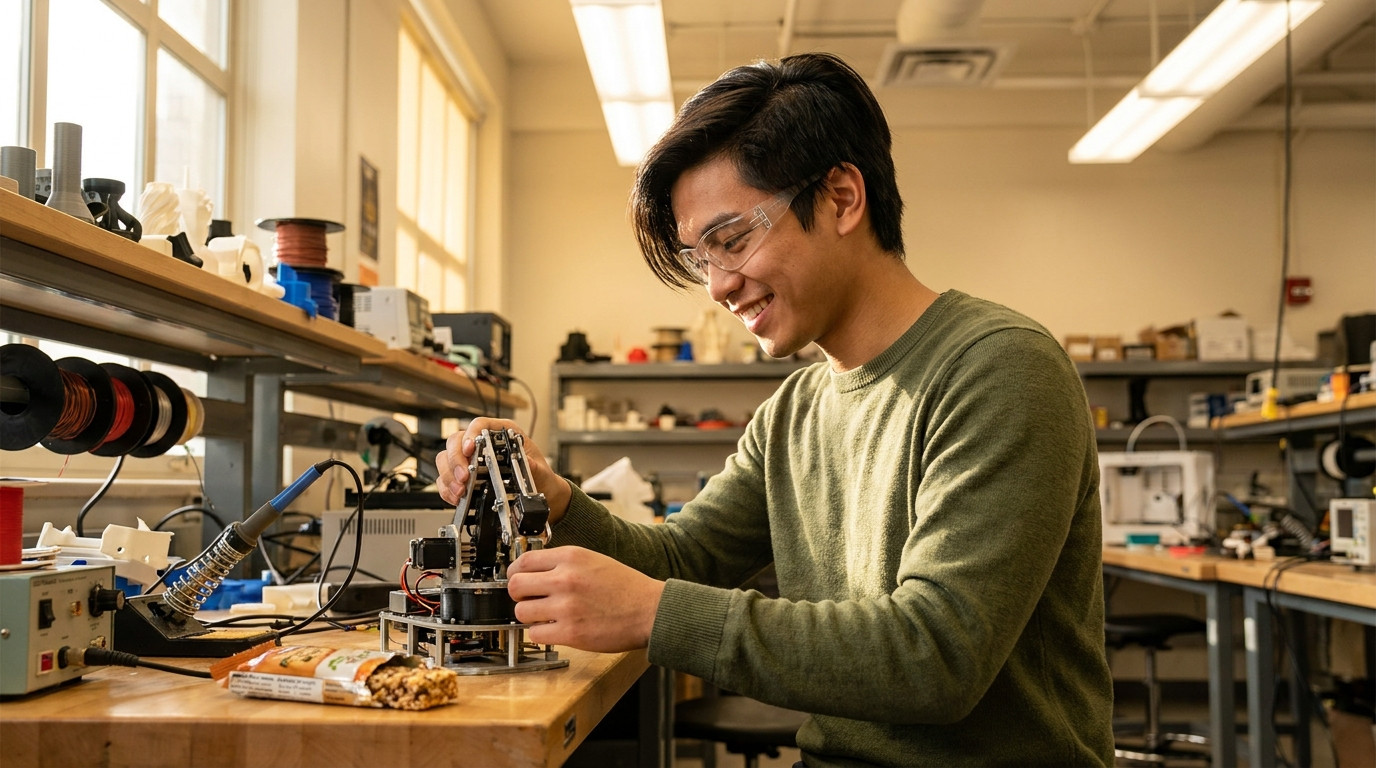
Physical dexterity in unpredictable environments means adapting your hands-on work to conditions that change constantly. Robots are still terrible at this. An electrician rewiring a 90-year-old house with non-standard layouts. A plumber squeezing through a crawl space that doesn't match any blueprint. A surgeon adjusting technique mid-operation based on what they find. These situations require real-time physical problem-solving that current robotics simply can't match.
The Bureau of Labor Statistics projects that employment of electricians will grow 9 percent from 2024 to 2034, nearly three times faster than the average for all occupations. HVAC technicians are projected to grow 8 percent over the same period. These aren't jobs that are "surviving" AI. They're booming because of the physical, unpredictable nature of the work.
Creative Judgment and Original Thinking
Creative judgment is the ability to make taste-based, culturally informed decisions about what resonates with people. AI isn't close to replicating it. There's a fundamental difference between AI generating 50 logo options and a creative director knowing which one will actually make people feel something. AI can produce content at scale. It can't tell you whether that content is good, relevant, or culturally appropriate for a specific audience in a specific moment.
So where does that leave creative professionals? In a stronger position than most people think. The World Economic Forum identifies creative thinking as one of the fastest-rising skills in importance for 2025-2030, noting that employers increasingly value human judgment in guiding and curating AI outputs rather than replacing creative roles outright.
Complex Decision-Making Under Uncertainty
Complex decision-making under uncertainty is the process of weighing incomplete information, competing stakeholder interests, and ethical considerations to reach a judgment call. AI struggles with this profoundly. Think about a trial attorney adapting strategy in real time based on a witness's body language. Or a crisis manager deciding how to communicate during a company emergency when every option carries risk.
These scenarios involve ambiguity, moral weight, and the kind of contextual reading that requires lived human experience. AI works best when patterns are clear and outcomes are measurable. When the stakes are high and the "right answer" depends on who you ask? That's a human job.

Which Jobs Will AI Replace First?
The jobs most vulnerable to AI automation are roles built around repetitive, rules-based tasks with predictable inputs and outputs: data entry, basic customer service, routine bookkeeping, and simple content generation. These are the categories where AI is already making real inroads, and the shift is accelerating. Understanding what's actually at risk helps you avoid the vulnerable zones and invest your energy where it counts.
Data Entry and Repetitive Administrative Tasks
Data entry and repetitive administrative work sit at the top of the automation risk list because they involve the exact type of pattern-based, rules-driven tasks that AI handles efficiently. A Goldman Sachs report estimated that AI could affect the equivalent of 300 million full-time jobs globally, with office and administrative support having the highest share of automatable tasks at 46 percent.
Does this mean every admin assistant will lose their job tomorrow? No. But roles that consist primarily of moving data from one system to another, filing documents, or scheduling without strategic input are being absorbed by AI tools. Fast. The admin roles that survive are evolving into coordination and communication-heavy positions, which (again) require human skills.
Basic Content Generation and Translation
Basic content generation (think product descriptions, boilerplate emails, formulaic blog posts) is one area where AI is already doing significant work. Same goes for straightforward translation. If the content follows a predictable template and doesn't require cultural nuance or editorial judgment, AI can handle it faster and cheaper.
But here's the nuance. Editorial judgment, brand voice, audience awareness, and cultural sensitivity are still firmly human territory. The content strategist who decides what to write, why it matters, and how it should land with a specific audience? That role is growing, not shrinking. The shift is from content production to content direction.
Customer Service Chatbots and Tier-1 Support
Gartner predicts that agentic AI will autonomously resolve 80 percent of common customer service issues without human intervention by 2029. For Tier-1 support (password resets, order tracking, basic FAQ responses) the transition is already well underway.
The customer service roles that remain safe are the complex ones. De-escalating an angry customer. Working through a billing dispute that involves exceptions to company policy. Providing emotional support during a frustrating experience. These require empathy, improvisation, and judgment, the same traits that make jobs AI-proof across every industry.
Routine Financial Analysis and Bookkeeping
Basic bookkeeping and routine financial analysis are increasingly automated. AI excels at categorizing transactions, flagging discrepancies, and generating standardized reports. If your job description is mostly "enter numbers and generate a summary," AI is coming for that workflow.
Yet forensic accounting, strategic financial planning, client-facing advisory work, and anything involving complex tax strategy or regulatory interpretation remains deeply human. The accountant who understands why a client's business model requires a creative approach to tax planning? Still very much needed. If you're headed into finance, aim for the strategic and advisory side.
30+ Jobs That Won't Be Replaced by AI in 2026
Here's where it gets practical. Below are 30-plus AI-proof careers organized into seven categories. Each category shares a common trait that makes it resistant to automation. For quick reference, there's a master comparison showing roles, salary ranges, and AI risk levels at the end of this section.
Healthcare and Mental Health (6 Roles)
Healthcare is one of the most AI-resistant fields in the entire economy. The BLS projects that the healthcare and social assistance sector will grow 8.4 percent from 2024 to 2034, nearly three times faster than the overall economy. Why? These roles combine physical assessment, emotional support, and ethical judgment in ways that AI can't replicate.
Registered Nurses provide hands-on patient care, advocate for patients during treatment decisions, and act as the emotional anchor of the healthcare experience. Physical Therapists design and adjust rehabilitation programs in real time based on how a patient's body responds. No two sessions look the same. Occupational Therapists help people relearn daily activities after injury or illness, requiring creative problem-solving tailored to each person's life. Psychiatrists combine medical knowledge with deep emotional attunement to treat mental health conditions, with median salaries exceeding $250,000. Substance Abuse Counselors build long-term trust relationships that are central to recovery. Home Health Aides provide intimate, physical caregiving in unpredictable home environments and are projected to add the most new jobs of any occupation in the economy.
Skilled Trades and Hands-On Work (5 Roles)
Skilled trades are among the most AI-proof careers you can pursue. Every job site is different. Every building has surprises. Every repair requires real-time physical adaptation. The BLS projects electrician employment to grow 9 percent by 2034, with about 81,000 openings per year.
Electricians work in environments that are never standardized (old homes, new construction, industrial settings) and must adapt on the spot. Plumbers deal with unpredictable physical spaces where blueprints rarely tell the full story. HVAC Technicians diagnose and repair climate systems that vary wildly between buildings, with projected growth of 8 percent through 2034. Welders perform precision physical work in conditions ranging from underwater to high-altitude construction. Construction Managers coordinate human teams across complex, ever-changing job sites where no two days look alike.
Creative and Strategic Roles (5 Roles)
Creative roles are AI-resistant because they require taste, cultural intuition, and the kind of "this just feels right" judgment that no model can replicate. AI is a powerful creative tool. But tools need operators with vision.
Creative Directors make the final call on brand direction, campaign concepts, and visual identity, decisions that shape how millions of people perceive a company. UX Designers research how real humans interact with products and translate those insights into designs that feel intuitive, averaging around $155,000-$235,000 at the director level. Brand Strategists build and evolve a company's positioning based on market shifts, cultural moments, and competitive dynamics. Film Directors orchestrate performances, visual storytelling, and emotional arcs in ways that require deeply human artistic sensibility. Music Producers blend technical skill with artistic instinct to create sounds that resonate with specific audiences and moments.
Education and Training (4 Roles)
Education roles are AI-resistant because teaching is fundamentally about human relationships. AI can deliver information. It can't inspire a struggling student, adapt to a classroom's social dynamics, or recognize when a child needs emotional support more than academic instruction. And despite BLS projections showing flat overall growth in K-12 teaching, persistent teacher shortages across 45 states (especially in special education) mean demand for qualified educators far outstrips supply.
K-12 Teachers manage classroom dynamics, differentiate instruction for diverse learners, and act as mentors and role models. Special Education Teachers face particularly acute demand, with about 46,000 leaving the profession annually and fewer than 30,000 new graduates entering, creating a persistent shortage. Corporate Trainers design and deliver learning experiences that build team capabilities, adapting in real time to group energy and comprehension. Academic Advisors guide students through complex personal and academic decisions, providing mentorship that requires understanding each student's unique situation.
Social Services and Community Work (4 Roles)
Social services careers are built entirely on human relationships and trust. The exact capabilities AI can't replicate. These roles require meeting people where they are, often in chaotic or emotionally intense situations, and building the kind of rapport that makes real change possible.
Social Workers advocate for vulnerable populations, handle complex family systems, and make high-stakes recommendations about child welfare, housing, and mental health. Community Health Workers bridge the gap between healthcare systems and underserved communities, relying on cultural knowledge and personal trust. Career Counselors help individuals through career transitions with empathy and personalized guidance, something particularly valuable when AI is reshaping the job market itself. Nonprofit Program Directors design and manage community-serving programs that require stakeholder management, cultural competence, and adaptive leadership.
Management and Strategy (4 Roles)
Management and strategy roles are AI-proof because they center on leading people, reading organizational politics, and making judgment calls where the "right" answer depends on context that no algorithm can fully grasp. The World Economic Forum identifies leadership and people management as among the fastest-growing skill demands through 2030.
Project Managers coordinate cross-functional teams, manage competing priorities, and keep humans aligned toward shared goals. Operations Managers optimize how organizations actually function day to day, with median salaries around $103,000 and top earners exceeding $239,000. HR Directors shape company culture, mediate conflicts, and make hiring decisions that require understanding people on a level AI can't match. Management Consultants diagnose organizational problems and recommend solutions that account for company culture, politics, and human dynamics, with median compensation ranging from $100,000 to $150,000+.
Legal and Compliance (3 Roles)
Legal careers are a nuanced case. AI is already automating some legal research and document review tasks. But the roles that involve human judgment, courtroom advocacy, and ethical reasoning remain firmly AI-proof.
Trial Attorneys build arguments, read juries, cross-examine witnesses, and adapt strategy in real time. These activities require persuasion, emotional intelligence, and improvisation. Judges weigh evidence, interpret law within human context, and make rulings that account for circumstances no algorithm can fully evaluate. Compliance Officers work in the gray areas of regulatory frameworks, balancing organizational interests with legal and ethical obligations. While some paralegal tasks face automation risk, the strategic and interpersonal core of legal work is safe.
| Career | Category | Median Salary | AI Risk | Growth Outlook (2024–2034) |
|---|---|---|---|---|
| Registered Nurse | Healthcare | $86,000 | Very Low | +6% |
| Physical Therapist | Healthcare | $99,000 | Very Low | +14% |
| Occupational Therapist | Healthcare | $96,000 | Very Low | +12% |
| Psychiatrist | Healthcare | $250,000+ | Very Low | +7% |
| Substance Abuse Counselor | Healthcare | $53,000 | Very Low | +19% |
| Home Health Aide | Healthcare | $33,000 | Very Low | +21% |
| Electrician | Skilled Trades | $62,000 | Very Low | +9% |
| Plumber | Skilled Trades | $61,000 | Very Low | +4% |
| HVAC Technician | Skilled Trades | $57,000 | Very Low | +8% |
| Welder | Skilled Trades | $48,000 | Low | +2% |
| Construction Manager | Skilled Trades | $104,000 | Low | +8% |
| Creative Director | Creative & Strategy | $130,000 | Low | Stable |
| UX Designer/Director | Creative & Strategy | $155,000–$235,000 | Low | +6% |
| Brand Strategist | Creative & Strategy | $95,000 | Low | Stable |
| Film Director | Creative & Strategy | $85,000 | Low | Stable |
| Music Producer | Creative & Strategy | $75,000 | Low | Stable |
| K-12 Teacher | Education | $62,000 | Very Low | Shortage-driven demand |
| Special Education Teacher | Education | $65,000 | Very Low | Acute shortage (45 states) |
| Corporate Trainer | Education | $64,000 | Low | +6% |
| Academic Advisor | Education | $50,000 | Low | Stable |
| Social Worker | Social Services | $58,000 | Very Low | +7% |
| Community Health Worker | Social Services | $48,000 | Very Low | +14% |
| Career Counselor | Social Services | $61,000 | Low | +5% |
| Nonprofit Program Director | Social Services | $68,000 | Low | Stable |
| Project Manager | Management | $98,000 | Low | +6% |
| Operations Manager | Management | $103,000 | Low | +5% |
| HR Director | Management | $136,000 | Low | +6% |
| Management Consultant | Management | $100,000–$150,000+ | Low | +10% |
| Trial Attorney | Legal | $120,000–$210,000+ | Low | +5% |
| Judge | Legal | $160,000 | Very Low | Stable |
| Compliance Officer | Legal | $75,000 | Low | +4% |
What Are the Best AI-Proof College Majors?
The best AI-proof college majors build capabilities AI cannot replicate: deep emotional intelligence, physical assessment skills, creative judgment, and complex human-to-human communication. If you're choosing a major with AI resilience in mind, focus on what the degree teaches you to do with people, not just what it teaches you to know. For a deeper dive, check out our full guide to AI-Proof College Majors: 10 Highest-Paying Degrees.
Majors That Build Human-Centric Skills
Nursing, social work, education, psychology, and occupational therapy are standout majors because every course and clinical hour builds competencies that are fundamentally un-automatable. You're not just learning theory. You're learning to read people, make judgment calls under pressure, and build trust in high-stakes situations.
NACE research shows that nearly 90 percent of recruiters now prioritize problem-solving ability, and more than 80 percent seek strong teamwork skills. That's exactly what these human-centric majors are designed to develop. And with 70 percent of employers now using skills-based hiring over GPA screening, the practical, people-focused competencies these majors build are more valuable than ever.
STEM Majors With an AI-Collaboration Edge
Computer science, data science, and engineering aren't at risk from AI. They're evolving alongside it. The students who thrive in these fields aren't the ones who only learn to code. They're the ones who understand systems design, human-computer interaction, and the ethical implications of the technology they build. Our guide to The Computer Science Job Market in 2026 breaks down this shift in detail.
Data science is moving from data collection (automatable) to data interpretation and strategic storytelling (deeply human). Engineering disciplines that involve physical systems (civil, mechanical, biomedical) remain strongly AI-resistant because they require working through real-world unpredictability. The key is choosing a STEM path that positions you as the person who directs AI, not the person whose tasks AI replaces.
Underrated Majors for an AI-Proof Career
Some of the most AI-resistant skill sets come from majors nobody talks about in the "what should I study" conversation. Philosophy develops rigorous critical thinking, logical argumentation, and ethical reasoning. These skills are in rapidly growing demand as companies grapple with AI governance and bias. Communications builds persuasion, audience analysis, and narrative construction skills that sit at the core of marketing, PR, public affairs, and leadership. Environmental Science combines fieldwork, policy analysis, and community engagement in ways that are difficult to automate.
Honestly, I think these majors are undervalued. The World Economic Forum's research consistently shows that analytical and creative thinking rank among the most important skills for 2025-2030. These "underrated" majors build exactly those capabilities, often with less competition and more direct career paths than people assume.
| Major | Category | AI Risk Level | Key AI-Proof Skills Built | Top Career Paths |
|---|---|---|---|---|
| Nursing | Human-Centric | Very Low | Patient empathy, clinical judgment, physical assessment | Registered Nurse, Nurse Practitioner, Healthcare Admin |
| Social Work | Human-Centric | Very Low | Crisis intervention, advocacy, relationship building | Clinical Social Worker, Community Organizer, Policy Analyst |
| Education | Human-Centric | Very Low | Classroom management, differentiated instruction, mentorship | K-12 Teacher, Special Ed Teacher, Corporate Trainer |
| Psychology | Human-Centric | Low | Behavioral analysis, emotional attunement, research design | Counselor, UX Researcher, HR Specialist, Therapist |
| Occupational Therapy | Human-Centric | Very Low | Adaptive problem-solving, patient-centered care, motor assessment | Occupational Therapist, Rehab Director |
| Computer Science | STEM + AI Collab | Moderate (task-dependent) | Systems design, AI governance, human-computer interaction | AI Engineer, Software Architect, Tech Lead |
| Data Science | STEM + AI Collab | Moderate (task-dependent) | Data storytelling, strategic interpretation, stakeholder communication | Data Strategist, Analytics Manager, Product Analyst |
| Engineering (Civil/Mechanical/Biomedical) | STEM + AI Collab | Low | Physical systems design, real-world problem-solving, safety judgment | Civil Engineer, Biomedical Engineer, Project Engineer |
Will AI Replace Entry-Level Jobs?
AI will reshape many entry-level roles, but it won't eliminate the entry-level job market. Some specific tasks within junior positions are being automated (data entry, basic QA, formulaic writing). But at the same time, AI is creating entirely new entry-level roles that didn't exist two years ago. The core need for organizations to train and develop junior talent isn't going away.
The fear that AI will eliminate the "bottom rung of the ladder" is understandable but overstated. Here's what's actually happening, and how to position yourself on the right side of it.
Which Entry-Level Roles Are Most at Risk
The entry-level roles facing the most pressure are those where day-to-day tasks are highly predictable and rules-based. Junior data entry positions, basic QA testing, entry-level bookkeeping, and simple copywriting (think product descriptions and template-based emails) are the categories seeing the fastest AI adoption.
According to McKinsey, up to 30 percent of hours currently worked across the U.S. economy could be automated by 2030, a figure accelerated by generative AI. The biggest impact falls on office support, customer service, and food service roles. If you're looking at entry-level positions, prioritize roles that involve client interaction, creative problem-solving, or coordination across teams. Those are the tasks that stay human.
How Entry-Level Roles Are Evolving, Not Disappearing
Here's the part the doom-and-gloom headlines miss. Entry-level jobs aren't disappearing. They're changing what they involve. A marketing coordinator in 2026 spends less time formatting spreadsheets and more time interpreting campaign data. A junior designer spends less time resizing assets and more time making creative decisions. The floor has risen, and that's actually good news for anyone willing to build skills above the automation line.
AI is also creating entirely new junior roles: AI trainers who evaluate and improve model outputs, prompt specialists who optimize how organizations use AI tools, and human-in-the-loop QA professionals who catch what AI misses. If you're wondering how to get a job with no experience, the playbook is to build proof that you can do the human-judgment work that AI can't.

How to Future-Proof Your Career as a Student
Future-proofing your career starts with three moves: build the human skills AI can't replicate, get real experience that proves those skills to employers, and learn to work alongside AI rather than competing against it. These aren't vague suggestions. They're specific, actionable strategies that separate students who thrive in an AI-driven market from students who get left behind.
Build Skills AI Can't Replicate
The most AI-resistant skills are communication, critical thinking, emotional intelligence, and adaptability. You might call this "the human premium." And these aren't soft skills in the sense that they're optional or secondary. They're the capabilities that are appreciating in value as AI commoditizes technical knowledge.
LinkedIn's 2026 Skills on the Rise report shows that while AI-related technical skills are growing fast, demand for leadership communication, stakeholder management, and cross-functional coordination is surging alongside them. The professionals who combine AI literacy with strong human skills are the most competitive in the job market. For a comprehensive list of what to highlight, check out 50+ Skills to Put on Your Resume in 2026.
Get Hands-On Experience Before You Graduate
Real experience is the single strongest signal you can send to employers, and it matters more than ever. NACE data shows that 70 percent of employers now use skills-based hiring practices, and less than 40 percent even screen for GPA. What they're looking for instead is evidence that you can solve real problems in real professional settings.
This is where Externships come in. An Externship is a short, remote, project-based professional experience with a real company. Many Externships now build AI-adjacent skills directly: the Pfizer AI-Powered Document Intelligence Externship has you automating healthcare documents using OCR, LLMs, and RAG. The Wayfair AI Agent Engineering Externship teaches you to build AI agents for business intelligence. And the Amazon Operations & Strategy Externship uses Python and sentiment analysis on real employee data. You work on actual business challenges with professional mentorship, building exactly the kind of AI + human skills that employers are hiring for. Explore all Externships here.
Learn to Work With AI, Not Against It
The students who will have the strongest careers aren't the ones who ignore AI, and they're not the ones who are scared of it. They're the ones who learn to use AI as a tool while applying the human judgment that makes AI output actually useful.
Think of it as a formula: AI + you > AI alone. A marketing analyst who can use AI to process data and tell a compelling story about what the data means is more valuable than either the AI or the human working separately. AI literacy (understanding what AI tools can do, where they fall short, and how to direct them effectively) is quickly becoming as essential as knowing how to use spreadsheets was 20 years ago.
And the good news? You don't need a computer science degree to become AI-literate. Start using AI tools in your coursework, your side projects, and your Externships — programs like the Pinterest Gen Z Consumer Behavior Externship have you using AI to turn raw data into strategic narratives, while the Outamation AI Document Insights Externship teaches Python, OCR, and RAG on real mortgage documents. Practice evaluating AI outputs critically. Learn to ask better prompts. The skill isn't in using AI. It's in knowing when AI's output is good enough and when it isn't.
What Does an AI-Proof Career Actually Look Like?
An AI-proof career looks like a role where your most important contributions are things no machine can do: building trust with a patient, reading the energy in a room to adjust your leadership approach, making a creative bet based on cultural intuition, or solving a problem that doesn't have a clean answer. It's not about avoiding technology. It's about being the human that technology needs in the loop.
The 78 million net new jobs the World Economic Forum projects by 2030 aren't a random assortment. They're concentrated in healthcare, education, skilled trades, creative strategy, and management. All fields where human skills are the core product, not a nice-to-have.
Your move right now is simple: pick a direction from the 30+ careers in this guide that genuinely interests you, start building the human skills that make that path AI-proof, and get real experience that proves you can do the work. Whether that's through an Externship with a company like Amazon or Pinterest, a volunteer role, or a campus leadership position, the point is to start stacking evidence of your human capabilities before you graduate.
AI isn't replacing you. It's raising the bar on what "entry-level" means. And now you know exactly how to clear it.
FAQs
Will AI replace all jobs eventually?
No. AI will automate specific tasks within jobs, not entire roles. The World Economic Forum projects 78 million net new jobs by 2030 in fields where human skills are essential. Jobs requiring empathy, physical dexterity, and creative judgment will grow, not shrink.
What jobs will AI replace by 2030?
Jobs most at risk by 2030 include data entry clerks, basic customer service agents, routine bookkeepers, simple content writers, and assembly line workers with repetitive tasks. McKinsey estimates that up to 30 percent of work hours in the U.S. could be automated. Roles involving predictable, rules-based work with minimal human interaction face the highest risk.
Is computer science still a good major if AI is taking over?
Yes. Computer science graduates who learn to build, manage, and audit AI systems are in higher demand than ever. The risk is for graduates who only learn to code without understanding systems design, ethics, or human-computer interaction. Read more in our Computer Science Job Market in 2026 guide.
What skills make you AI-proof?
Critical thinking, emotional intelligence, complex problem-solving, persuasive communication, and adaptability are the five most AI-resistant skills. LinkedIn's 2026 research confirms that demand for leadership communication and cross-functional coordination is growing alongside AI technical skills. These require contextual judgment, empathy, and creativity that current AI can't replicate.
Are healthcare jobs safe from AI?
Most healthcare jobs are highly AI-resistant because they require physical assessment, emotional support, and ethical judgment. The BLS projects 8.4 percent growth for healthcare from 2024 to 2034, nearly three times the economy-wide average. Nursing, physical therapy, and mental health counseling are among the safest roles. Some diagnostic tasks may shift to AI-assisted, but clinical roles remain human-dependent.
Should I worry about AI replacing my internship?
Not if your role involves creative problem-solving, client interaction, or strategic thinking. AI is more likely to change what entry-level professionals do (less data entry, more analysis and decision-making) than eliminate junior positions entirely. Building human-centric skills through project-based professional experiences gives you an edge that AI can't replicate.
What are the highest paying AI-proof jobs?
Psychiatrists ($250,000+), UX directors ($155,000-$235,000), management consultants ($100,000-$150,000+), operations managers ($103,000 median, up to $239,000), and trial attorneys ($120,000-$210,000+) are among the highest-paying AI-resistant roles. Skilled trades like electricians ($62,000 median, up to $106,000) offer strong pay with near-zero automation risk.
About the Author
Bifei Wang has spent 17 years focused on human flow and the growth of young professionals, spanning international education, career training and coaching, and recruitment process outsourcing. Over 7 years at Extern, he has had one-on-one sessions with thousands of students exploring careers in consulting, finance, tech, marketing, and data, giving him a firsthand view of how the job market has shifted for early-career professionals and what it actually takes to break in.