TL;DR
• Transferable skills are abilities you build in one context (school, clubs, volunteer work) that apply directly to professional roles. Communication, problem-solving, teamwork, adaptability.
• You already have them from group projects, club leadership, capstone courses, and volunteer commitments. You just haven't named them yet.
• NACE's 2025 Job Outlook: 90% of employers prioritize problem-solving, 80%+ want teamwork, and 70% now use skill-based hiring over GPA filtering.
• This guide gives you a 3-step framework to identify, categorize, and articulate your transferable skills for resumes and interviews, even with zero formal work experience.
• Externships are short, remote professional experience programs where you work on real projects with real companies, building transferable skills with direct mentorship from an extern manager.
What Exactly Are Transferable Skills, and Why Should You Care?
The Definition Every Student Needs to Know
Transferable skills are competencies you develop in one setting that remain valuable across different roles, industries, and career stages. Communication, critical thinking, teamwork, project management. Unlike technical skills tied to specific software, these travel with you regardless of where you end up working.
NACE frames these as career readiness competencies, identifying eight core areas employers expect graduates to demonstrate. Think of transferable skills as your professional operating system. The apps (technical skills) change. The OS runs everything underneath.
One clarification that matters: transferable skills aren't just "soft skills." That's a common mixup. Soft skills are a subset. Transferable skills also include harder competencies like budgeting, data analysis, and project coordination that work across industries. Calling them "soft" makes students dismiss them. Don't.
What Employers Actually Prioritize (The 2025 Numbers)
According to NACE's Job Outlook 2025 survey, nearly 90% of employers rate problem-solving as essential in new hires. Over 80% cite teamwork. More than 75% want strong communication.
Here's the bigger shift, though. 70% of employers now use skill-based hiring as of 2026. Only 38% still filter by GPA. They're telling you directly: show us what you can DO.
And there's this weird perception gap. NACE found a 30%+ difference between how students rate their own leadership versus how employers rate those same students. You likely have more of these skills than you realize. You're just not translating them into language recruiters recognize.
How Are Transferable Skills Different From Technical Skills?
Technical skills (Python, Figma, QuickBooks) answer "what tools can you use?" Transferable skills (problem-solving, communication, leadership) answer "how effectively can you work, learn, and adapt?"
Both belong on your resume. But here's the thing: technical skills can become obsolete when software changes. Transferable skills compound over a 40-year career. A startup hiring manager cares that you can manage a project under pressure just as much as knowing which specific tools you'll use to do it. Probably more.
Where Are Students Actually Building These Skills?
The reframe that changes everything: you don't need a job title to develop professional competencies. You've been building them in places you haven't thought to look.
Club Leadership and Campus Organizations
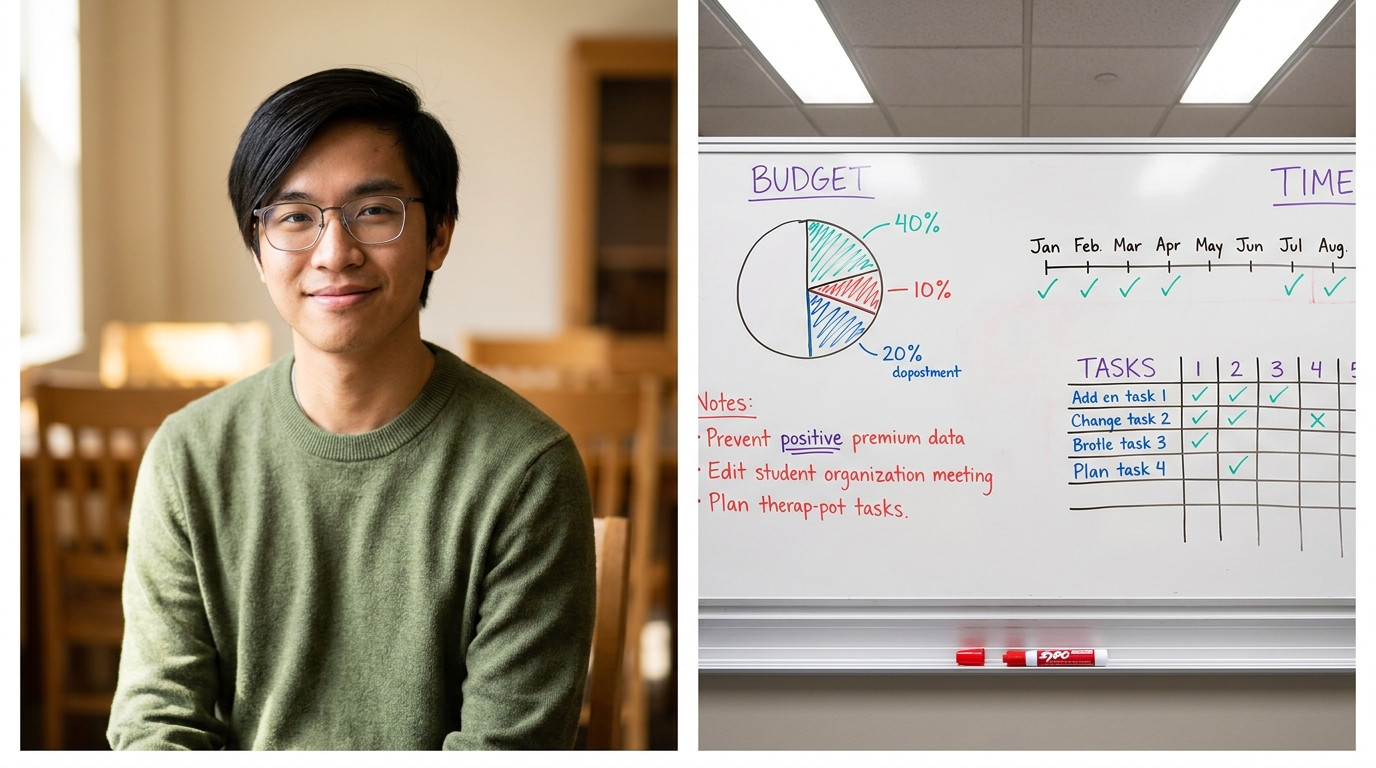
Every campus org is basically a miniature company. Seriously.
Your time as club treasurer translates to financial management and budget oversight. That event coordinator role? Project management, vendor communication, and deadline wrangling. Even being a reliable general member who contributes ideas and follows through demonstrates collaboration and dependability.
Specificity is everything here. "I was in the marketing club" means nothing. "I developed a content calendar that increased event attendance by 40% across three campaigns" shows communication, strategic thinking, and measurable results. Same experience. Completely different impression.
Capstone Projects and Group Coursework
Your capstone is probably the closest thing to a professional deliverable you've produced in college. And most students totally undersell it.
Think about what it actually required. Scoping a problem. Dividing work among teammates with different strengths (and different levels of commitment, let's be honest). Managing a multi-week timeline. Presenting findings to evaluators. Iterating when feedback came back harsh. That's project management, collaboration, analytical thinking, and professional communication in one package.
Group projects build skills too. Yes, even the awful ones. Especially the awful ones, actually. Navigating a teammate who disappears for two weeks? Conflict resolution. Your original plan falling apart? Adaptability. Presenting results you're not 100% confident in? That's just... every Tuesday in most professional roles.
Volunteer Work and Community Involvement
Students often think volunteer work "doesn't count." It does.
Organizing a charity fundraiser requires the same project management skills as coordinating a product launch. Tutoring younger students develops teaching, patience, and the ability to simplify complex ideas (a skill consultants spend years trying to develop). Planning an event, managing a budget, recruiting participants, coordinating schedules. All professional competencies. The context being unpaid doesn't make the skills less real.
Externships and Structured Professional Experience
Clubs and coursework give you transferable skills as a byproduct. Structured professional programs like Externships are designed to build them intentionally. You work on real company projects with guidance from an extern manager, developing skills in a context that carries immediate professional credibility.
Here are the transferable skills students most commonly build through Externships:
• Project management — scoping deliverables, setting milestones, managing your own timeline across 2-8 weeks
• Professional communication — emails, status updates, and presentations with real stakeholders (not classmates)
• Research and analysis — market research, competitive analysis, data interpretation for business decisions
• Strategic thinking — connecting your work to actual company goals, not just checking boxes on a rubric
• Cross-functional collaboration — working with people across departments who have different priorities
• Self-direction — managing your own workload without a professor's weekly structure
• Stakeholder management — translating feedback from your extern manager into actionable next steps
• Industry-specific knowledge — understanding how a real business operates in finance, tech, marketing, or consulting
The difference between listing "project management" from a class project versus from an Externship? When you say "I developed project management skills through my Externship with a fintech startup," there's a direct professional reference and a company-endorsed project backing that claim. It bridges campus activities and the professional world in a way clubs can't replicate alone.
How to Actually Identify Your Transferable Skills (3 Steps)
Most articles hand you a generic list and say "pick the ones that apply." That's not useful if you genuinely don't know which skills you have. Here's what works instead.
Step 1: List Every Activity That Required Effort

Open a blank doc. Brain-dump every activity from the past two years that required you to show up, think, coordinate, or produce something. Don't filter. Just list.
Class projects (especially group ones). Club roles, including informal ones. Part-time work. Volunteering. Family responsibilities (managing household logistics is project management, full stop). Sports teams. Online communities you contribute to. Tutoring. Mentoring.
Aim for 15-30 items. If you have fewer than 10, dig deeper. When did you organize something? Solve a problem? Teach someone? Manage competing deadlines?
Step 2: Extract the Skill Behind Each Activity
Now translate each item into the transferable skill it developed:
• "Organized a club fundraiser that raised $2,000" → Project management, communication, budgeting, persuasion
• "Led 4 people through a semester-long capstone" → Leadership, delegation, conflict resolution, time management
• "Tutored freshmen in statistics twice a week" → Teaching, simplifying complexity, reliability, patience
• "Managed social media for student org" → Content strategy, analytics, audience understanding
• "Barista during morning rush" → Multitasking, customer communication, pressure management
One activity usually maps to three or four skills. That's normal. You're not picking one. You're recognizing that everything meaningful develops multiple competencies at once.
Step 3: Match Skills to Job Description Language
Pull up three job postings you'd genuinely want. Highlight every skill they mention. Compare against your Step 2 list.
"Excellent written communication" → your club newsletter writing qualifies. "Ability to manage multiple priorities" → your semester balancing 5 courses and a leadership role qualifies. "Collaborative team environment" → your capstone group qualifies.
The gap between your experience and employer expectations is almost always a language gap. Not a skills gap. You have the abilities. You just need to describe them the way hiring managers expect to hear them.
Which Transferable Skills Are Most In-Demand Right Now?
Based on NACE's employer survey and LinkedIn's 2025 Workplace Learning Report, here's what entry-level hiring managers are screening for:
Communication (Written and Verbal)
Communication tops every employer survey, with 75%+ of hiring managers rating it critical for entry-level roles. It covers writing clear emails, presenting ideas in meetings, actively listening during collaboration, and adapting your message for different audiences.
You already practice this. Research papers (structuring arguments). Emails to professors (professional tone, conciseness). Capstone presentations (data storytelling). Club meetings (facilitation). Even building your resume is an exercise in concise self-marketing.
The sub-skill most students miss? Audience awareness. Writing for your professor, pitching to a club advisor, and explaining a project to a recruiter who has zero context are three completely different communication challenges. Being able to shift registers is the actual skill.
Problem-Solving and Critical Thinking
90% of employers call this essential. Not "nice to have." Essential.
You do it constantly without labeling it. Debugging code at 2am. Figuring out how to stretch a $500 club budget across four events. Resolving a conflict between group members who want opposite things. Each time, you're analyzing a problem, weighing options, choosing an approach, and living with the results.
That's the pattern employers want to see. Not that you solved some Fortune 500 crisis. Just that you can walk them through: "Here's what was wrong, here's what I considered, here's what I did, here's what happened."
Teamwork and Collaboration
Over 80% of employers rate this critical. But "I'm a team player" in an interview communicates exactly nothing.
What actually demonstrates teamwork: adapting your working style for someone who processes things differently than you. Giving honest feedback without torching a relationship. Picking up slack when someone's overwhelmed. Delegating based on strengths rather than splitting things evenly.
Every group project, intramural season, and volunteer shift has given you reps. Be specific about WHAT you contributed and HOW the team worked better because of it.
Adaptability and Time Management
Juggling a full course load, a leadership role, and a part-time job simultaneously? That's time management many professionals genuinely struggle with. You've been doing it since sophomore year.
Adaptability shows up when your plans break. Professor shifts a deadline. Club event loses its venue. Capstone scope shrinks because the data doesn't exist. According to LinkedIn's 2025 Workplace Learning Report, adaptability is among the fastest-growing skills employers seek. Makes sense. Everything's changing fast.
Leadership (You Don't Need a Title)
You don't need "President" on your LinkedIn to show leadership. Leadership is taking initiative when nobody assigns you to.
Starting a study group before an exam. Suggesting a different approach when your team's project stalls. Mentoring a freshman. Volunteering to present when everyone else avoids eye contact with the professor.
NACE's research shows that 30%+ perception gap for leadership specifically. Students have it. They just describe it as "oh, I just kind of took charge because nobody else was going to." That IS leadership. Name it.
How to Get Transferable Skills Onto Your Resume
You've identified your skills. Now make them visible to someone spending 7 seconds scanning your resume.
The Skills Section: Categories That Work
If you're working with limited formal experience, a clean skills section does serious work. Organize by category:
Transferable: Project Management, Team Leadership, Research & Analysis, Public Speaking, Conflict Resolution
Technical: Python, Google Analytics, Figma, Excel, Canva
Languages: English (native), Mandarin (conversational)
This tells a recruiter immediately what you bring. It also feeds ATS systems the keywords they need to match you against job descriptions.
Experience Bullet Points: Before and After
The jump from "activity description" to "professional bullet point" follows one formula: Action verb + what you did + scale/context + result.
Before: "Was the treasurer of the finance club." After: "Managed a $4,500 annual budget across 12 events, reducing overspending by 25% through quarterly forecasting."
Before: "Did a group capstone project on sustainability." After: "Led a 4-person research team analyzing campus energy usage, delivering a 30-page report adopted by administration for 2026 planning."
Before: "Volunteered at a food bank." After: "Coordinated weekly volunteer schedules for 15+ participants, improving shift coverage from 70% to 95% over one semester."
The "after" versions showcase leadership, project management, and coordination without ever using those words as labels. Show the skill in action. Don't just name it.
Mistakes That Undercut Student Resumes
Three patterns to avoid:
Claiming skills without backing them up. Writing "Leadership" in your skills section means nothing if no bullet point anywhere proves you led something. Every skill claim needs at least one supporting example.
Buzzword soup. "Dynamic team player with excellent communication skills" could be anyone. Replace generic descriptors with specific actions. What did you communicate? To whom? And what changed because of it?
Listing everything. Twenty-five skills makes it look like you copied a "what to put on a resume" article (which, honestly, many students do). Pick 8-12 that genuinely match the role. Make sure each one appears naturally in your experience bullets.
How to Talk About Transferable Skills in Interviews

Your resume gets the interview. Skill stories get the offer.
Using the STAR Method for Skill Stories
When someone asks "Tell me about a time you showed leadership," they want a story. Not a definition. STAR gives you structure:
Situation: "In my junior year, our capstone team lost a member mid-semester." Task: "I needed to redistribute three weeks of work across three remaining people without missing our deadline." Action: "I mapped each person's strengths, reassigned tasks accordingly, and set up a daily check-in tracker." Result: "We delivered on time and earned the highest project grade in our section."
Sixty seconds. Proves leadership, adaptability, project management, and teamwork without using any of those words as labels. Prepare 3-5 STAR stories covering different skills. You can adapt them to almost any behavioral question.
The "What Experience Do You Have?" Pivot
This question scares students who feel underqualified. Here's your reframe:
"While I haven't held a full-time role in [field], I developed [specific skill] through [specific experience] where I [specific result]."
Example: "I haven't worked in marketing professionally, but through managing our student org's Instagram for two years, I built content strategy and analytics skills. I grew our following from 200 to 1,400 and improved event signups 60% through targeted posting schedules."
Employers hiring entry-level candidates know you don't have years of experience. They're screening for potential, learning speed, and foundational competencies. Your transferable skills ARE the experience they're evaluating.
Start building professional transferable skills through Extern's guided Externship programs →
FAQs
What are the top 7 transferable skills employers look for?
According to NACE's 2025 employer survey, the seven most in-demand are: communication, problem-solving, teamwork, leadership, critical thinking, adaptability, and professionalism. Nearly 90% of employers rate problem-solving as essential for entry-level hires. And 65% of companies now prioritize demonstrated skills over GPA when screening candidates.
Can I put transferable skills on a resume with no work experience?
Yes. Skills from clubs, coursework, volunteer work, and academic projects absolutely belong on your resume. Format them in a dedicated skills section with brief evidence, or work them into experience bullet points describing campus activities. Employers using skill-based hiring care about what you can do, not the context where you learned it.
What's the difference between transferable skills and soft skills?
Transferable skills include both soft skills (communication, teamwork, empathy) and hard skills (data analysis, project management, budgeting) that work across industries. Soft skills are a subset, not a synonym. Any ability that's portable across roles and sectors counts as transferable, whether it's "soft" or "hard."
How do I prove transferable skills without professional experience?
Specific examples from academic projects, club leadership, volunteer work, or Externships. Quantify when you can ("managed a $3,000 budget," "coordinated 8 people," "increased attendance 40%"). The STAR method helps structure these into clear interview stories with evidence employers can evaluate.
Do extracurricular activities count as real transferable skills?
They do. Employers increasingly value demonstrated competencies over where you gained them. Club leadership, event planning, team sports, and volunteer coordination all develop professional skills. NACE reports 65% of employers now use skill-based hiring over GPA screening. Your activities carry real weight when you articulate the skills behind them clearly.
About the Author
Bifei Wang has spent 17 years focused on human flow and the growth of young professionals, spanning international education, career training and coaching, and recruitment process outsourcing. Over 7 years at Extern, he has had one-on-one sessions with thousands of students exploring careers in consulting, finance, tech, marketing, and data, giving him a firsthand view of how the job market has shifted for early-career professionals and what it actually takes to break in.