What Can You Do With an Environmental Science Career?
TL;DR
• Environmental science careers span consulting, policy, sustainability management, research, and law. Environmental consulting is the most accessible entry-level track, paying $55K–$85K depending on experience and location.
Passionate about sustainability? Our sustainability and energy internships summer 2027 guide covers top programs in clean energy, ESG, and environmental consulting.
• Entry-level environmental consulting jobs typically need a relevant B.S. degree, not years of experience. Certifications like HAZWOPER and GIS basics can fill in for on-the-job history.
• Employment of environmental scientists is projected to grow 4% from 2024 to 2034, with about 8,500 openings per year on average (BLS, 2025).
• Companies in energy, construction, real estate, and manufacturing all hire environmental consultants to meet federal and state compliance requirements.
An Extern Externship in sustainability or environmental science gives you real project-based experience to prove your skills before your first job offer.
What Is an Environmental Science Career?
An environmental science career is any professional role focused on studying, managing, or protecting the natural environment. That covers everything from assessing contaminated soil at industrial sites to advising corporations on carbon reduction strategy. It's where hard science meets policy, business, and law — which explains why the career paths are so varied.
The numbers back it up. According to the Bureau of Labor Statistics, environmental scientists and specialists held about 95,000 jobs in 2024. Employment's projected to grow 4% through 2034, adding roughly 8,500 openings per year. Tightening regulations, climate-related infrastructure investment, and corporate sustainability commitments are all driving that growth.
What environmental scientists actually do
Day-to-day work depends on your role and employer. But most environmental science careers involve some version of:
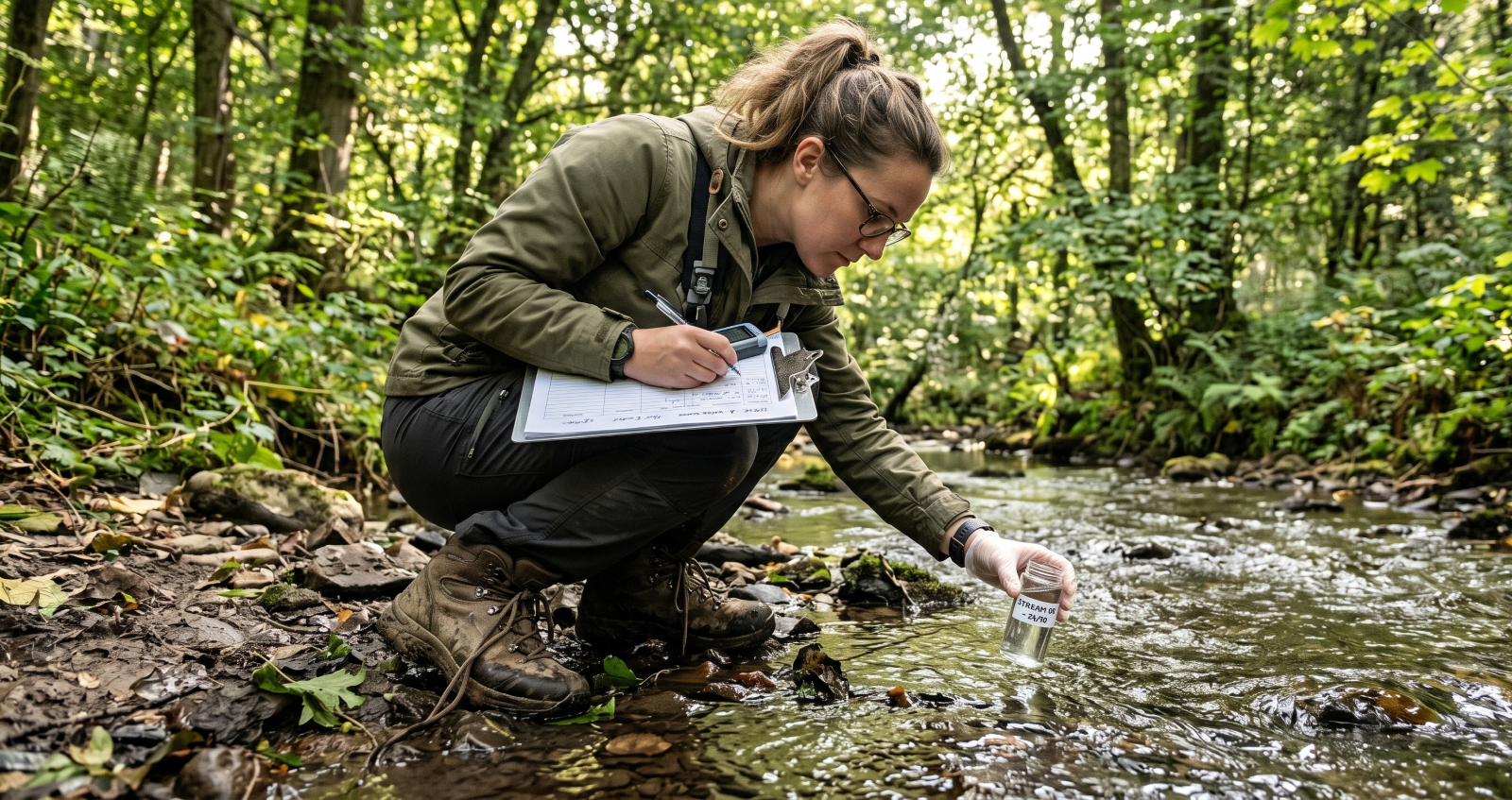
• Field sampling: collecting soil, water, or air samples for lab analysis
• Environmental impact assessments (EIAs): documenting how a proposed project will affect surrounding ecosystems
• Regulatory compliance: reviewing permits and making sure clients meet EPA or state standards
• GIS mapping: using geographic information systems to visualize and analyze environmental data
• Technical report writing: translating field data into professional documents that regulators and clients can act on
It's a mix of outdoor fieldwork and office-based analysis. Most environmental professionals do both, and the balance shifts as you move up.
Who hires environmental science graduates
You don't have to work for a nonprofit. Environmental science graduates land jobs at:
• Private consulting firms: the biggest employer category; companies like AECOM, Tetra Tech, Arcadis, and WSP hire directly from undergrad programs
• Government agencies: EPA, NOAA, state environmental departments, Army Corps of Engineers, and the Fish and Wildlife Service
• Corporations: manufacturing, energy, real estate, and construction companies all hire in-house environmental staff or sustainability managers
• Law firms: environmental attorneys and paralegals advising clients on regulatory disputes
• Research institutions and universities: for graduate-level research and academic roles

Environmental Consulting Jobs: The Most Accessible Entry Point
Environmental consulting is the most accessible entry-level path in environmental science. Environmental consultants are third-party advisors hired by companies, developers, and government agencies to work through environmental regulations, assess potential contamination, and make sure projects meet federal and state requirements.
Consulting firms range from global engineering giants to regional boutique practices. They hire science graduates regularly, and you don't need years of field experience to start. A relevant degree and the right certifications get you through the door. If you're not sure where to begin, our guide on landing your first job without experience covers strategies that apply directly to consulting.
What environmental consultants do day-to-day
At a consulting firm, your work revolves around client projects. Expect a mix of:
• Phase I and Phase II Environmental Site Assessments (ESAs): Phase I is document research and interviews; Phase II involves physical sampling to confirm or rule out contamination
• Wetland delineation and ecological surveys: required for permits under the Clean Water Act
• NEPA compliance: environmental review for federally funded projects
• Remediation planning: designing cleanup strategies for contaminated sites
• Air quality and stormwater permit applications: helping manufacturing clients meet state requirements
Projects run anywhere from a few weeks to several years. You'll shift between field visits, lab coordination, and report writing. Junior staff build skills fast by rotating across project types. It's genuinely varied work.
Environmental consulting jobs salary in 2026
Pay varies by experience, location, and firm size. According to PayScale and ZipRecruiter:
• Entry-level (less than 1 year): $55K–$65K
• Early career (1–4 years): $63K–$75K
• Mid-career (5–9 years): $75K–$95K
• Senior/PM level: $100K–$130K+
The BLS reports a median annual wage of $80,060 for environmental scientists and specialists across all employer types as of May 2024. Coastal cities and high-cost metros pay noticeably more.
Remote environmental consulting jobs: what's actually possible
Short answer: some of it, not all of it.
Fully remote-friendly work:
• Report writing and regulatory document review
• GIS data analysis and mapping
• Phase I ESA research (records review, database searches, interviews)
• Project management and client coordination
Requires in-person presence:
• Phase II site sampling and soil borings
• Wetland delineation and ecological field surveys
• Site inspections and remediation oversight
So if you're specifically targeting remote environmental consulting jobs, look for roles that lean toward data analysis, report production, or project coordination over field-heavy work. Large national firms like AECOM and Tetra Tech increasingly post hybrid roles, especially for mid-career professionals.
Other Environmental Science Career Paths
Environmental consulting isn't the only option. It's not even the right fit for everyone. Here are four other tracks worth knowing before you decide.
Environmental law and policy careers
Environmental lawyers advise clients on compliance with laws like the Clean Air Act, Clean Water Act, and NEPA. They represent clients in regulatory disputes and draft permits or environmental legislation. Two distinct paths exist here: the JD route (law school, typically 3 years post-undergrad) or the policy analyst track, which often requires a master's in environmental policy but no law degree.
Across all specializations, lawyers earned a median of $151,160 in May 2024 (BLS). Environmental attorneys in government or nonprofits often start in the $65K–$85K range; Big Law environmental practices can exceed $200K for senior partners. It's a high ceiling. But law school is a real investment of time and money. Go in clear-eyed.
Sustainability project manager
This is the corporate sustainability track. Sustainability project managers lead a company's ESG work: setting carbon reduction targets, auditing supply chains, preparing annual sustainability reports for investors, coordinating with operations teams to hit benchmarks. Fortune 500 companies are under real investor and regulatory pressure on ESG disclosure, so these roles are multiplying fast.
And here's the thing: you don't need a pure science degree. A blend of business and science background is often preferred over either alone. If you're coming from a science program, our guide on biology degree career paths covers similar crossover roles. Salaries typically start around $55K–$70K and grow to $100K+ with experience.
Government and regulatory agencies
The EPA, NOAA, Fish and Wildlife Service, and state environmental agencies offer stability, strong benefits, and mission-driven work. Applications go through USAJobs.gov, which has its own learning curve. Federal hiring timelines are longer than the private sector: often 3–6 months from application to offer.
Pay follows the General Schedule (GS) pay scale. Entry-level B.S. positions typically start at GS-7 or GS-9, roughly $45K–$60K depending on location. Career progression is structured but slower than consulting. If the mission matters more than the pace of advancement, government is worth the patience.
Environmental research and academia
Research is the most credential-intensive path. Most lead researcher roles require an M.S. or Ph.D., typically 2 to 6 additional years beyond your B.S., plus postdoc positions and competitive fellowship applications. Grad school stipends often run $20K–$35K.
But if field science or lab-based discovery is genuinely what drives you, no other track comes close. NSF, EPA, and NOAA all fund environmental research at universities. It's a long game, and for the right person, the payoff is real.
What Environmental Science Careers Pay in 2026
Before you pick a path, it helps to see the full salary picture in one place. Pay varies a lot by sector, experience level, and geography. Consulting and law outpace government at the senior end. Government is more predictable at the entry level.
The table below compares starting, mid-career, and senior pay across the five major environmental science career tracks. All figures sourced from the Bureau of Labor Statistics, PayScale, and ZipRecruiter (2025–2026 data). These are national figures; major metros typically run 20–30% higher.
| Career Track | Entry-Level | Mid-Career (3–5 yrs) | Senior Level | Primary Employer |
|---|---|---|---|---|
| Environmental Consultant | $55K–$65K | $65K–$85K | $90K–$130K+ | Private consulting firms |
| Environmental Lawyer | $65K–$85K | $100K–$140K | $150K+ (BLS median all lawyers: $151,160) | Law firms, government |
| Sustainability Manager | $55K–$70K | $75K–$100K | $110K–$150K | Corporations (ESG teams) |
| Gov't Environmental Scientist | $45K–$60K | $60K–$80K | $85K–$110K | EPA, NOAA, state agencies |
| Environmental Researcher | $40K–$55K | $60K–$80K | $85K–$110K | Universities, research institutes |
Worth noting: corporate sustainability and environmental law salaries can spike significantly above these senior-level ranges in major cities. Government pay is more predictable and location-adjusted via the GS schedule. Boutique technical consulting firms can also exceed large-firm averages for senior specialists.
How to Land Environmental Consulting Jobs Without Experience
Here's the loop most students hit: job postings ask for 2 years of field experience, but you need a job to get field experience. So where do you actually start?
Entry-level environmental consulting jobs don't require as much as the listings suggest. What firms actually screen for: a relevant degree, genuine curiosity about environmental work, and some signal that you can function in a professional environment. You can build that signal before your first interview. Strategically.
Certifications that open doors fast
Three credentials are worth earning before you apply:
1. HAZWOPER 40-Hour: Required for working on hazardous waste sites under OSHA standards. Online courses start around $210; in-person institutional programs run $750–$875. This single certification unlocks a whole category of environmental consulting postings that are otherwise inaccessible without it.
2. GIS Fundamentals: Esri's ArcGIS is the industry standard. Start with Esri's free online learning paths or your university's campus Esri license. Nearly every consulting firm uses GIS daily. Even basic proficiency sets you apart.
3. LEED Green Associate: Entry-level sustainability credential from the U.S. Green Building Council. $250 standard, $100 for full-time students. One note: a new LEED v4.1-based beta exam launches April 28, 2026: check usgbc.org for current version details before you register.
None of these require prior professional experience. All three can go on your resume within months of starting.
How to get real environmental science experience
Certifications show you're serious. But what consulting firms really want to see is evidence you can function on a project team: that you've produced something real and gotten feedback from a professional.
That's what an Extern Externship is built to give you. Extern places you on real sustainability and environmental projects with company partners where you produce actual deliverables, guided by an extern manager who functions like a professional mentor. The Externship credential you earn signals to hiring managers that you've done real work, not just coursework.
So for environmental science specifically, look at Extern's sustainability and energy Externship tracks. Partners like Hydroficient work on real-world energy efficiency projects with the kind of scope that shows up directly in your portfolio and in interviews. For more on building credentials from scratch, see our guide on getting an internship with no experience.
Where Environmental Consulting Jobs Are
The largest employers of environmental consultants are private consulting engineering firms. Five names worth knowing:
• AECOM: global infrastructure firm with one of the largest environmental divisions in the U.S.
• Tetra Tech: environmental and water consulting specialist; consistently one of the top environmental employers
• Arcadis: strong in contaminated site remediation and water management internationally
• WSP: significant U.S. environmental practice spanning due diligence to remediation
• Stantec and Brown and Caldwell: strong mid-size options, often with better early-career mentorship than mega-firms
But consulting firms aren't the only place to look. Environmental roles also show up at:
• Energy companies (utilities, oil and gas, renewables): all face heavy environmental compliance requirements
• Real estate developers: Phase I/II ESAs are required on every major acquisition
• Municipalities and county governments: stormwater, solid waste, and brownfield programs need environmental staff
• Manufacturing companies: in-house environmental health and safety (EHS) managers are common across most sectors
Environmentally conscious companies: those with published sustainability reports, LEED-certified facilities, or public compliance track records: tend to invest more in their environmental teams. That usually means better mentorship and development opportunities for early-career staff, too.
Ready to start building the credentials that get you in the door? Explore Extern's externships and find sustainability and environmental projects where you can start doing real work now.
FAQs
What do environmental lawyers do?
Environmental lawyers represent clients in regulatory disputes, advise on compliance with laws like the Clean Air Act and NEPA, and draft permits or environmental legislation. Some focus on litigation; others specialize in transactional advisory work during real estate or development deals. It's different from a policy analyst role — environmental lawyers hold a JD and practice law, not just research and advocacy.
Is environmental consulting a good career?
It is, honestly. Environmental consulting offers strong job stability, variety across project types, and clear career progression from field technician to project manager to principal. The tradeoff is travel and fieldwork in your early years, which can be heavy. But if you like applied problem-solving and want more variety than a desk-only role, it's a solid long-term choice. The regulatory tailwinds driving demand aren't going away anytime soon.
Can I get an environmental consulting job with a biology degree?
Yes. Consulting firms regularly hire biology, chemistry, geology, and ecology majors. What matters more than your exact major: your coursework (field methods, environmental science, statistics), relevant certifications (HAZWOPER especially), and any project experience you can point to. A biology grad with a HAZWOPER certification and an environmental Externship on their resume is competitive for most entry-level environmental consulting roles.
What STEM careers exist in environmental science?
Several paths fall under the environmental science STEM umbrella: environmental engineer (designs pollution control systems), hydrologist (studies water systems and quality), geologist (assesses soil and subsurface conditions), toxicologist (evaluates chemical hazards), GIS analyst (maps and analyzes environmental data), and ecologist (studies ecosystem structure and biodiversity). Many of these roles overlap at the entry level, especially inside consulting firms.
How long does it take to become an environmental consultant?
You can apply for entry-level environmental consulting jobs with a 4-year B.S. degree in environmental science, biology, geology, chemistry, or a related field. No additional certification is required to start applying: though HAZWOPER and GIS training significantly improve your odds. From starting college to landing your first environmental consulting role: typically 4–5 years total.
About the Author
Bifei Wang has spent 17 years focused on human flow and the growth of young professionals, spanning international education, career training and coaching, and recruitment process outsourcing. Over 7 years at Extern, he has had one-on-one sessions with thousands of students exploring careers in consulting, finance, tech, marketing, and data, giving him a firsthand view of how the job market has shifted for early-career professionals and what it actually takes to break in.