Biotech and Pharma Internships Summer 2027: Which Companies Are Hiring and How to Get In
TL;DR
• Biotech and pharmaceutical companies are actively posting summer 2027 internships, with Pfizer, Regeneron, Genentech, Merck, Amgen, and Eli Lilly among the 15 largest programs hiring across R&D, manufacturing, and commercial roles.
• The Bureau of Labor Statistics projects 5.4% employment growth in pharmaceutical manufacturing through 2034, translating to roughly 19,000 new production jobs.
• Most biotech internships recruit between August and November 2026 for summer 2027 positions, with some rolling programs staying open into spring 2027.
• Median published intern pay across postings that disclose is roughly $52,000 to $57,200 annualized, though large pharma companies typically pay higher.
• You don't need a biology degree. Engineering, chemistry, data science, and business majors all qualify for biotech intern roles depending on the function.
What's an Externship? An Externship is a short, remote project where you do real work for a real company. Unlike internships, Externships are open year-round and don't require relocation. Explore healthcare and life sciences programs from Pfizer, TruBridge Healthcare, Healthcare Operations Consulting, and more at extern.com/externships.
What Are Biotech and Pharmaceutical Internships?
Biotech internships are some of the most competitive and well-paid paths into the life sciences industry. But what does the work actually look like?
What Does a Biotech Intern Actually Do?
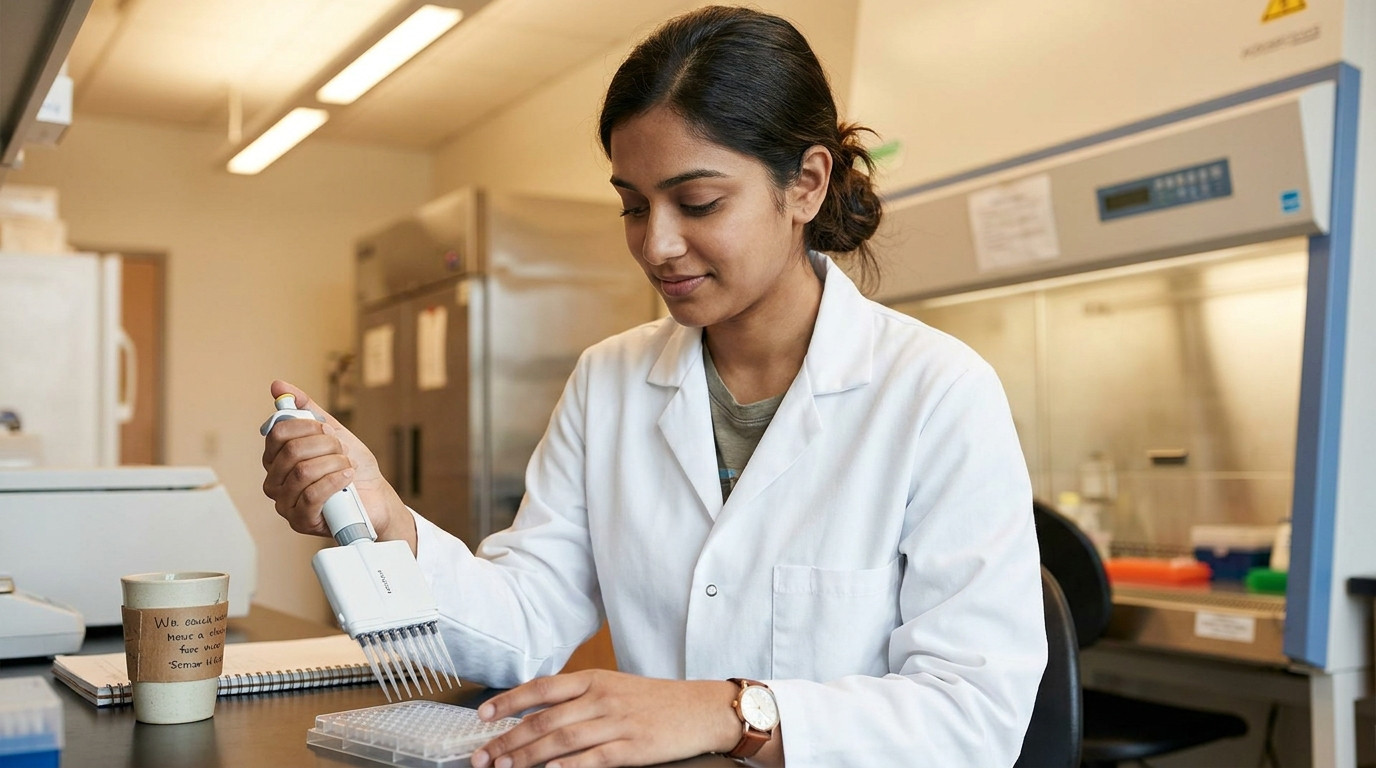
A biotech internship is a structured, paid program, typically 10 to 12 weeks, where undergraduate or graduate students tackle real projects inside a pharmaceutical, biotechnology, or life sciences company. The range of work might surprise you. R&D interns run assays, analyze clinical data, or build computational models. Manufacturing interns work inside GMP-regulated facilities on process validation and quality control. And commercial interns? They're handling market research, brand strategy, or regulatory submissions.
Genentech's summer program places students across research, development, commercial, and technical operations for 10 to 12 weeks. Every intern gets paired with a project and a mentor. Amgen does something similar: intern projects are designed to produce a deliverable you actually present to leadership at the end of the summer.
That's a real presentation to real executives. Not a hypothetical exercise.
Biotech vs Pharma vs Life Sciences: Does the Label Matter?
Honestly? Not much for your internship search. Biotech companies (Genentech, Amgen, Regeneron) focus on biologics, large-molecule therapies derived from living cells. Traditional pharma (Pfizer, Merck, Eli Lilly) historically worked on small-molecule drugs, though most now do both. "Life sciences" is just the umbrella that covers everything, including medtech and diagnostics.
What matters more is the function. An R&D internship at Genentech and one at Pfizer will look more alike than an R&D role and a commercial role at the same company.
Which Companies Offer the Best Biotech Internships for Summer 2027?
Fifteen companies run the largest and most established biotech and pharma internship programs in the US. We've organized them by tier and included both our detailed guide and the company's own careers portal so you can go straight to the application.
| Tier | Company | Typical Intern Roles | Timeline | Guide | Apply |
|---|---|---|---|---|---|
| Big Pharma | Pfizer | R&D, Manufacturing, Commercial, Digital | Oct–Nov 2026 | Guide | Apply |
| Merck | Research, Manufacturing, IT, Commercial | Sep–Nov 2026 | Guide | Apply | |
| Johnson & Johnson | R&D, Engineering, Marketing, Data Science | Dec 2026–Jan 2027 | Guide | Apply | |
| Eli Lilly | STEM, Sales, Marketing, Technology | Sep–Nov 2026 | Guide | Apply | |
| AbbVie | R&D, Commercial, Operations | Aug–Nov 2026 | Guide | Apply | |
| Novartis | Research, Commercial, Manufacturing (9 divisions) | Sep–Jan 2027 | Guide | Apply | |
| Pure-Play Biotech | Regeneron | Research, Clinical, Manufacturing | Sep–Nov 2026 | Guide | Apply |
| Genentech | Research, Development, Commercial, Tech Ops | Nov 2026–Mar 2027 | Guide | Apply | |
| Amgen | Discovery Research, Operations, Commercial | Sep–Nov 2026 | Guide | Apply | |
| Biogen | Research, Digital Health, Manufacturing | Sep–Nov 2026 | Guide | Apply | |
| Vertex Pharmaceuticals | Research, Clinical Development, Commercial | Sep–Nov 2026 | Guide | Apply | |
| Moderna | mRNA Research, Manufacturing, Commercial | Sep–Nov 2026 | Guide | Apply | |
| Specialty & Global | Bristol Myers Squibb | R&D, Manufacturing, Commercial | Sep–Nov 2026 | Guide | Apply |
| Gilead Sciences | Research, Clinical Ops, Commercial | Sep–Nov 2026 | Guide | Apply | |
| Sanofi | Pharma, Vaccines, Consumer Healthcare | Sep–Nov 2026 | Guide | Apply |
Big Pharma
The largest pharma companies run the biggest intern classes. We're talking hundreds of interns per summer across multiple sites and functions.
Pfizer runs Pfizer Futures, a paid program placing roughly 500 students across seven career tracks for 10 to 12 weeks. R&D requires a 3.3 GPA; all other tracks require 3.0. Applications typically open in October 2026 and fill fast on rolling review. The program fills about 70% of slots within the first 45 days. Pfizer is also an Extern partner, offering remote Externship projects in supply chain and document intelligence.
Merck offers internships and co-ops across research, manufacturing, IT, and commercial functions through jobs.merck.com.
Johnson & Johnson hires across R&D, engineering, marketing, finance, supply chain, and data science. Most programs run 10 to 12 weeks, with recruitment typically in December through January. Apply at careers.jnj.com.
Eli Lilly runs a 10-to-12-week program spanning STEM, sales and marketing, HR, and technology. Internships are the primary entry into a full-time Lilly career. They hire well beyond lab roles. Apply at careers.lilly.com.
AbbVie posts most roles in late August through early November. Pay ranges from $25 to $44 per hour depending on role and location. Here's the thing: the majority of interview slots fill within the first four to six weeks. Don't wait until November. Apply at careers.abbvie.com.
Novartis runs a 12-week program across 9 divisions and 25+ functional areas, plus specialized programs like NIBR Summer of Science (hard December 1 deadline) and PRISM for underrepresented students. Apply at novartis.com/careers.
Pure-Play Biotech
Smaller programs, more research-intensive, and often harder to get into.
Regeneron is one of the most competitive biotech internships out there. Applications typically open in early September 2026, with priority review ending mid-October. 3.0 GPA minimum. F-1 students on CPT are eligible. Apply at careers.regeneron.com.
Genentech posts summer roles on a rolling basis from November through March. Most hiring decisions are made by end of March. They hire at all degree levels and require at least one year of university. Genentech's FuturePath program is specifically built to convert top interns to full-time. Apply at careers.gene.com.
Amgen runs internships across research, operations, and commercial. The Discovery Research internships are smaller and highly competitive. Apply at careers.amgen.com.
Biogen offers positions across research, digital health, manufacturing, and commercial. Apply at careers.biogen.com.
Vertex Pharmaceuticals hires across research, clinical development, and commercial operations. Apply at careers.vrtx.com.
Moderna runs internships across its mRNA platform, covering research, manufacturing, and commercial. Apply at modernatx.com/careers.
Specialty and Global Pharma
Bristol Myers Squibb hires across R&D, manufacturing, and commercial. Apply at careers.bms.com.
Gilead Sciences has positions in research, clinical operations, and commercial. Apply at gilead.com/careers.
Sanofi offers roles across pharma and vaccines. Apply at careers.sanofi.com.
Roche runs internships in diagnostics, pharma, and corporate functions. Apply at careers.roche.com.
When Do Biotech Internships Open for Summer 2027?
The Recruiting Calendar, Month by Month
Biotech doesn't follow the hyper-compressed timeline of investment banking or consulting. Companies post individually over a broader window, which is both good news (more chances) and bad news (you need to track multiple timelines).
• August-September 2026: Early movers open. Regeneron typically posts in early September with priority review through mid-October. AbbVie starts in late August.
• October-November 2026: The main wave. Pfizer Futures opens (usually October). Novartis, Merck, and Amgen post most roles. This is the highest-volume window.
• November-March 2027: Genentech posts rolling from November through March. Novartis's NIBR Summer of Science has a hard December 1 deadline. Some companies keep positions open until filled.
• Rolling/Late: Smaller biotechs recruit year-round. Some large companies reopen if interns decline.
Why "Apply Early" Matters More Than You'd Expect
Rolling review is the norm in biotech, and it works differently than it sounds. Pfizer fills roughly 70% of its 500 Futures slots within 45 days of opening. AbbVie fills the majority of interview slots in the first four to six weeks.
So a posting that's technically still open could be practically full. Set calendar reminders for September 1 and October 1, 2026. Check each company's careers page weekly starting in late August.
How Much Do Biotech Interns Get Paid?
Pay by Company Tier
Biotech internships are paid, and they pay well relative to most industries.
Across 396 pharmaceutical intern postings tracked by the Extern Job Data Center in August 2026, median published pay was $57,200 annualized (roughly $27.50/hr) among the 23 postings that disclosed salary. The 25th percentile was $57,200 and the 75th was $74,890. That's a tight band, reflecting standardized pay at large employers.
For biotech intern postings specifically, the sample was smaller (18 postings, 5 with salary data), with a median around $52,000 annualized ($25/hr).
AbbVie pays $25 to $44 per hour depending on role and location. Pfizer and Regeneron sit at the higher end for large pharma. And graduate students (MS, PhD) typically earn more than undergrads at the same company.
One caveat: these figures represent median published pay across postings that disclose salary. About 38% of postings disclose, and those skew toward states with pay transparency laws (California, New York, Colorado, Washington). The actual market range may differ.
Benefits That Add Up
Housing stipends or relocation assistance can add $3,000 to $8,000 to the total package. Regeneron provides company-subsidized housing at some sites. And the conversion pipeline is the biggest benefit of all. A strong internship is a direct path to a full-time role worth $70,000 to $100,000+ at graduation.
What Skills Do Biotech Employers Want?
Technical Skills Across 414 Intern Postings
Generic career advice says "tailor your resume to the job." But tailor it to what, exactly? We track US internship postings daily through the Extern Job Data Center. Here's what 414 biotech and pharmaceutical intern postings listed as required or preferred skills in August 2026.
Top skills in biotech & pharma intern job descriptions
Skill frequency across 414 biotech + pharmaceutical intern postings · Extern Job Data Center, August 2026
Source: Extern Job Data Center · hiring.cafe aggregated data · Updated August 21, 2026
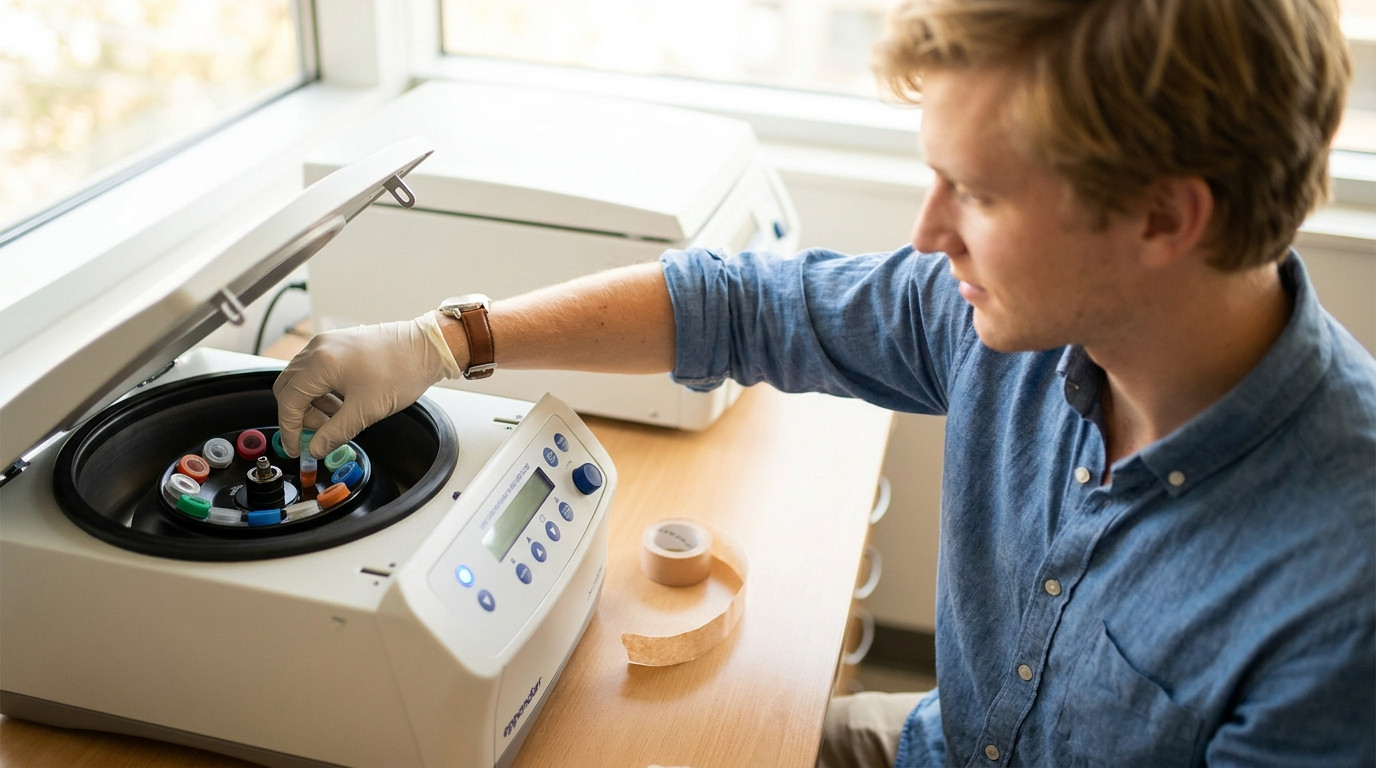
The split by function is clear. Pharmaceutical intern postings emphasize Microsoft Office, HIPAA compliance, pharmacy systems (Pyxis, Meditech, DoseEdge), and data entry. Biotech intern postings lean toward Excel, lab skills (pipetting, centrifuges, lab equipment), and, interestingly, AI tools. ChatGPT appeared in 3 of 5 sampled biotech postings.
Across both categories, the most requested skills are Microsoft Excel, Microsoft Office, Microsoft Word, and Microsoft PowerPoint. If your resume doesn't mention Excel proficiency, you're leaving relevance on the table regardless of your target function.
For R&D roles, add Python, R, and statistical analysis tools. For manufacturing and quality, GMP knowledge, HIPAA, and equipment certifications. For commercial, CRM systems and data analysis tools.

Soft Skills and Lab Etiquette
Attention to detail, documentation habits, and the ability to follow SOPs come up in nearly every biotech intern posting. In a GMP environment, sloppy documentation can trigger regulatory issues. If you're targeting R&D or quality roles, practice keeping a detailed lab notebook now. Cross-functional collaboration matters too. You won't be working in a silo at any of these companies.
What Majors Qualify for Biotech Internships?
The Obvious Ones: Biology, Biochemistry, Chemistry
The Extern Job Data Center shows the most common degree fields in biotech and pharma intern postings are Biology, Science (general), Engineering, Chemistry, Biotechnology, Public Health, and Pharmaceutical Sciences. Biology and biochemistry majors are the backbone of most R&D pipelines. Chemistry majors fit well into analytical and formulation roles.
No surprises there.
The Ones That Surprise People: Engineering, Data Science, Business
A significant chunk of biotech intern roles don't require a science degree at all.
Engineering majors (chemical, mechanical, industrial) are in high demand for manufacturing, process development, and quality roles. The BLS projects pharmaceutical manufacturing to be the eighth fastest-growing area of US manufacturing. Those roles need engineers, not biologists.
Data science and bioinformatics positions want CS, statistics, or math backgrounds. The fastest-growing pharma manufacturing role through 2034? Data scientist, at 31.3% projected growth.
And business majors fill commercial rotations at AbbVie, J&J, Eli Lilly, and Pfizer. If you're a marketing major interested in healthcare, pharmaceutical commercial internships are a real and underrated path. I'd argue they're one of the best-kept secrets in pharma recruiting.
How Can You Get a Biotech Internship With No Experience?
You don't need prior industry experience for your first biotech internship. But you do need proof that you can do the work. Here's how students actually build that proof.
Lab Research Through Your University
Undergraduate research is the strongest credential for R&D-focused biotech internships. Period. Most universities have research assistantship positions where you work in a faculty lab for course credit or a small stipend. NSF-funded REU programs place students in labs at other institutions for a full summer, with stipends and housing included.
Can't get a lab spot? Independent study projects with a faculty advisor also work. The point is demonstrating that you can follow protocols, produce results, and function in a structured research setting.
Build Proof Through Project-Based Experience
Not everyone has access to a university lab. And not every biotech internship requires wet-lab skills. Remote Externships let you work on real projects for real companies without relocating. Pfizer offers Externship projects through Extern where students build AI-powered document intelligence tools for clinical supply chain operations. TruBridge runs a healthcare data analytics Externship where you analyze public health datasets in Python and Power BI. That's resume-ready experience in healthcare data and operations that directly supports a biotech application, even if you've never touched a pipette.
Professional Development and Networking
Join professional societies early. BMES for biomedical engineering, AIChE for chemical engineering, ISPE for pharmaceutical engineering. All have student chapters with networking events and job boards.
LinkedIn is underrated for biotech. Follow hiring managers at your target companies, engage with their posts, and apply directly when they share openings. Both Regeneron and Genentech note that employee referrals materially improve your chances.
What's the Difference Between Biotech R&D and Pharma Manufacturing Internships?
R&D Track: Discovery, Preclinical, Clinical
R&D interns work on the science side: designing experiments, analyzing data, reviewing literature, contributing to active research. These roles typically need bio, biochem, or chem backgrounds and involve hands-on lab work. Think Genentech's research internships or Regeneron's discovery programs.
Day-to-day varies by team. A preclinical intern might run cell-based assays and analyze dose-response curves. A clinical operations intern might manage trial databases and regulatory docs. Same company, completely different work.
Manufacturing and Quality Track
Manufacturing interns work in GMP facilities on process validation, quality control testing, equipment qualification, and production support. These roles skew engineering-heavy (chemical, mechanical, industrial) and represent the growth engine of pharma employment. The BLS projects roughly 19,000 new pharma manufacturing jobs by 2034.
If you're an engineering major interested in pharma but not thrilled about lab research, this is your lane. Good pay, clear career ladders, high demand.
Commercial, Regulatory, and Everything Else
Marketing. Market access. Regulatory affairs. Supply chain. Medical affairs. Health economics.
These functions exist at every large pharma company, and they surprise students who think biotech equals lab coats. J&J, Eli Lilly, and AbbVie all run formal commercial leadership programs for interns. Business or communications major interested in healthcare? This is how you get in.
What Happens After a Biotech Internship?
Return Offer Rates and Full-Time Conversion
NACE data shows roughly 56% of interns nationally receive full-time offers. Large pharma with formal conversion pipelines often beat that number. Genentech runs FuturePath specifically to convert top interns. Pfizer, Merck, and J&J all extend return offers to strong performers.
It makes sense from the company's side too. They've already invested 10 weeks training and evaluating you. Hiring a proven intern is lower risk than hiring a stranger.
Career Paths From Your First Biotech Role
Career progression branches by function:
• R&D: Research associate, scientist, senior scientist, principal scientist, director or VP of research.
• Manufacturing: Process engineer, senior engineer, manufacturing manager, plant director.
• Commercial: Associate, brand manager, marketing director, VP of commercial.
Worth noting: the healthcare consulting pivot is real. Many biotech professionals move into pharma consulting at McKinsey, BCG, or specialized firms after a few years of industry experience.

Your Biotech Internship Application Checklist
1. Research companies now (August 2026). Review the 15 companies above, read their intern program pages, and figure out which functions match your major and interests.
2. Set calendar alerts. Mark September 1, October 1, and December 1 as checkpoints to review new postings.
3. Update your resume. Lead with technical skills (Excel, Python, lab techniques, GMP) that match your target function. Quantify everything: "Ran 200+ PCR reactions" beats "performed lab work."
4. Apply during priority windows. Get your applications in within the first two to four weeks of posting. Early applicants get reviewed first.
5. Prep for interviews. Biotech interviews often include a technical component (describe your research, walk through a protocol) plus behavioral questions. Practice explaining your projects to someone who's not in your field.
6. Build backup experience. If you lack lab or industry experience, look into Externships for project-based work with companies like Pfizer, or apply to REU programs at other universities.
7. Follow up. Connect with recruiters and hiring managers on LinkedIn after applying. A brief, professional message keeps your application visible.
8. Keep applying. Genentech posts through March. Smaller biotechs hire year-round. Five applications is not enough.
FAQs
Are biotech internships for summer 2027 still open?
Yes. As of August 2026, most large pharmaceutical companies including Pfizer, Regeneron, Genentech, and Merck are beginning to post summer 2027 internship positions. The main recruiting window runs from August through November 2026, with some rolling programs staying open into early 2027.
Do you need a biology degree for a biotech internship?
No. Biology and biochemistry majors fill most R&D lab roles, but biotech companies also hire engineering majors for manufacturing, data science majors for bioinformatics, and business majors for commercial rotations. Pfizer, J&J, and AbbVie all run formal commercial internship programs that recruit from non-science backgrounds.
How much do biotech interns get paid?
Median published pay across postings that disclose salary is roughly $52,000 to $57,200 annualized (about $25 to $27.50 per hour). Large pharma companies like Pfizer and Regeneron typically pay at the higher end, and some offer housing stipends or relocation assistance on top of the hourly rate.
What's the difference between a biotech internship and a pharmaceutical internship?
For students, the functional difference matters more than the label. Biotech companies (Genentech, Amgen, Regeneron) tend to focus on biologics and often have smaller, more research-intensive programs. Traditional pharma (Pfizer, Merck, Eli Lilly) runs larger programs across R&D, manufacturing, and commercial functions. Both hire interns the same way.
Can freshmen or sophomores get biotech internships?
Some companies offer early-career discovery programs for underclassmen, but most formal summer internships target juniors and seniors. Freshmen and sophomores can build competitive applications through undergraduate research, REU programs, and remote Externships that give you resume-ready project experience before you're eligible for the big programs.
Do biotech internships lead to full-time jobs?
Yes. NACE reports that roughly 56% of interns receive full-time offers nationally, and large pharma companies often beat that number. Genentech runs FuturePath specifically to convert top interns, and Pfizer, Merck, and J&J all extend return offers to strong performers.
Is pharmaceutical manufacturing a good career path?
The Bureau of Labor Statistics projects 5.4% employment growth in pharmaceutical manufacturing through 2034, translating to roughly 19,000 new production jobs. The fastest-growing roles are data scientist (31.3% growth), industrial machinery mechanic (26.1%), and information security analyst (25%). It's one of the more stable and well-paid sectors in manufacturing.
About the Author
Bifei Wang has spent 17 years focused on human flow and the growth of young professionals, spanning international education, career training and coaching, and recruitment process outsourcing. Over 7 years at Extern, he has had one-on-one sessions with thousands of students exploring careers in consulting, finance, tech, marketing, and data, giving him a firsthand view of how the job market has shifted for early-career professionals and what it actually takes to break in.
Explore Company Internship Guides (Biotech & Pharma)
In-depth guides to individual biotech and pharma company internships, each covering programs, deadlines, pay, eligibility, and how to apply: