Predicting Student Performance Using Machine Learning
Designed, Implemented, trained, and tested neural network to predict the performance of students using Deep Learning (DNN)-MAT-LAB project
MATLABDeep LearningDNN
 Currently an Extern @ARCeH
Data analyst in training, finishing a health outcomes externship to sharpen analytics skills and boost my resume for new roles.
Projects and case work from my ARCeH externship, showing applied analytics methods, data handling, and outcomes-focused analysis.
Designed, Implemented, trained, and tested neural network to predict the performance of students using Deep Learning (DNN)-MAT-LAB project
Utilised mathematical models such as diffusion and compartmental models to analyze data related to drug delivery mechanisms and optimize drug efficacy. Applied mathematical principles such as differential equations, probability theory, and optimization algorithms to model drug transport and distribution within organs and tissues.
Data analyst in training, finishing a health outcomes externship to sharpen analytics skills and boost my resume for new roles.
I am Minkail Muhammad. I hold a master's degree and have started my career while exploring a career change. I am completing a Data Analytics, Health Outcomes externship with ARCeH to strengthen my resume and improve competitiveness for jobs and internships.
Externships
Data Analytics, Health Outcomes Externship with ARCeH
In progress
Experience
Mathematics Instructor
Mathnasium of Hinsdale · Oct 2025-present
Area Manager
Amazon · Apr 2024 - Aug2025
Teaching Assistant
Loyola University Chicago, IL · Aug 2022 - Dec 2023
Education
Loyola University Chicago, IL
Masters, Mathematics · Class of 2023
Umaru Musa Yar’adua University, Katsina
Bachelor of Science, Mathematics · Class of 2019
Skills
Designed, Implemented, trained, and tested neural network to predict the performance of students using Deep Learning (DNN)-MAT-LAB project
Utilised mathematical models such as diffusion and compartmental models to analyze data related to drug delivery mechanisms and optimize drug efficacy. Applied mathematical principles such as differential equations, probability theory, and optimization algorithms to model drug transport and distribution within organs and tissues.
✅ Verified by Extern · ⏱️ In progress
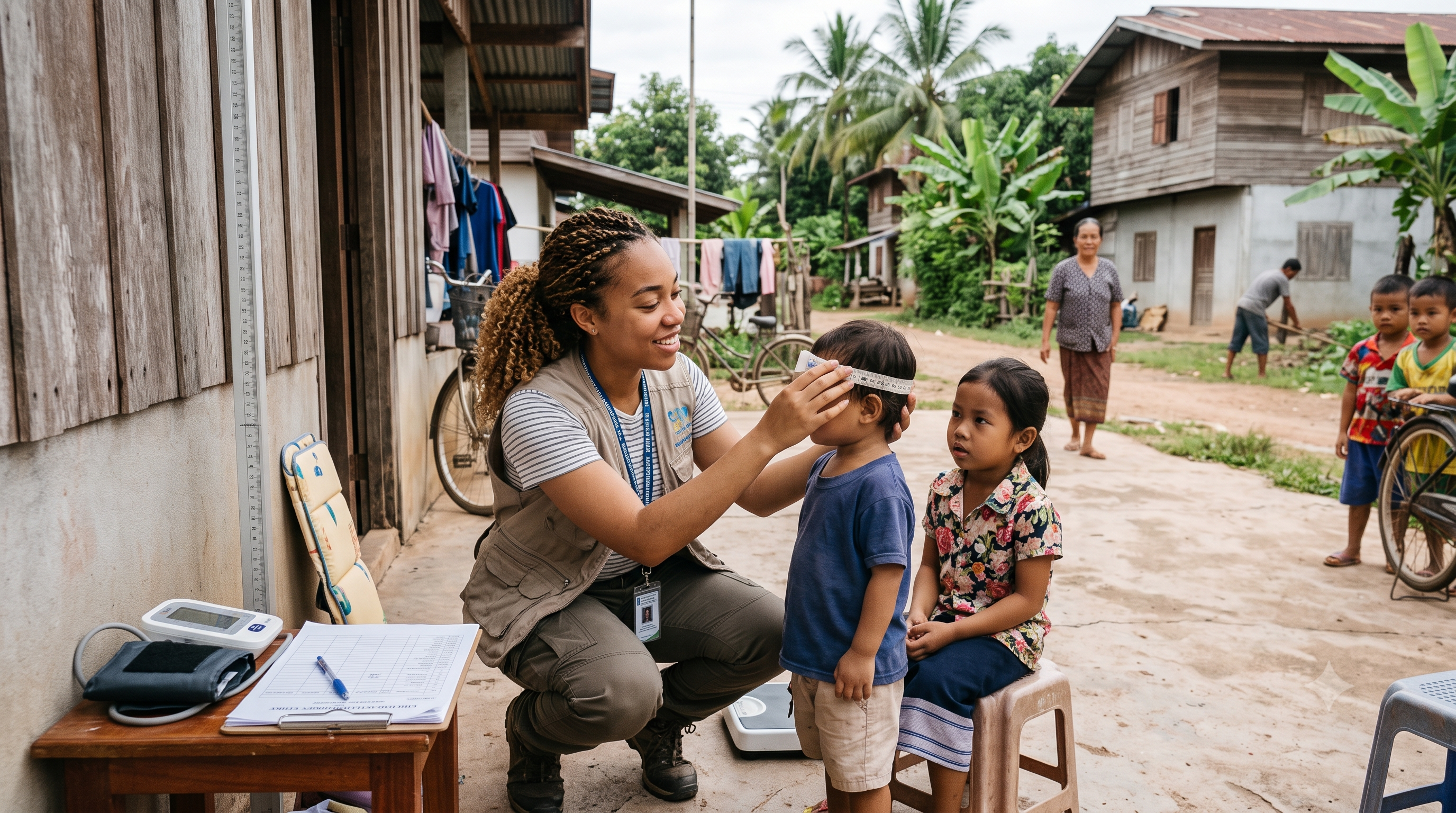
Here’s what the data says: put a pin in Bangkok. Draw a five-hour flight radius around it. You just circled half the world's population. And half of those people are kids under five, an age where survival itself isn't guaranteed. Five isn't an arbitrary number: it's the line researchers use as a proxy for a country's overall health, because almost every preventable childhood death, driven by a bad water source, poor air quality, or an infection nobody caught in time, happens before it. Clear five, and the odds of reaching adulthood jump astronomically. Don't, and the cause almost always traces back to poverty, healthcare access, environmental risk, or nutrition, something that could have been mapped, measured, and prevented in time. That's the gap this externship exists to close: turning scattered, messy public data into a specific, defensible answer about what's actually driving that risk in a given place, and pass it to the people at ARCeH who want to know about it.
The externship processed public and administrative datasets to identify drivers of under-five mortality within a defined geographic radius. The work combined data cleaning, correlational analysis, and variable selection to build defensible, data-driven explanations for mortality patterns. Outputs included cleaned datasets and analytic summaries of key correlates.
I translated messy public-health and environmental records into analysis-ready datasets, tested what correlations the data could support, and summarized the analytical limits and assumptions I observed.
